Tag: writing

  • Tree

    Tree

    By Mike Sedgwick

    HIGHLY COMMENDED in January Competition

     I survived thanks to the great storm. The flash burned some of my leaves, and the thunder shook my roots. The overshadowing beech split and toppled. Sunlight reached me through the gap in the canopy.

    For aeons, the foresters left us alone. The squire left his house derelict, his garden overgrew, and the swimming pool cracked. As seasons passed, we grew, bore fruit and decayed. Suddenly, men in khaki arrived during the flowering season and set up bivouacs among us. They felled some of us for firewood. One quiet afternoon, a young man scratched on my bark, ‘Bert loves Evie,‘ accompanied by a heart and a hieroglyphic of three dots and a dash  · · · –. He added the date, May 1944. The next morning, the men packed up and left, leaving my scar to heal. The honey fungus moved in and devoured my heartwood, leaving a hollow to the delight of the woodpeckers. Over the years, the void enlarged; pipistrelles and owls moved in. Later, a family of hedgehogs took up residence.

    Last spring, a man as old as Methuselah came searching. He scraped at my scar with his stick, rubbing off the lichen. ‘Evie,’ he called. ‘Here it is. I loved you even then, before you knew it. Bring the children to see.’

    ‘Grandpa, you were very naughty to hurt the tree,’ laughed the children.

    ‘Yes, it was naughty, but I wanted to leave a trace of my love for Granny in case I didn’t survive.’

    Granny, Grandpa, and the two children joined hands around my spreading trunk and began to sing: “Tie a yellow ribbon round the old oak tree.” Exhausted, they sat on my roots and enjoyed a picnic. This was my finest hour.

    Judge’s Comments: In which the tree is the narrator, on whom a soldier carved Bert Loves Edie, in May 1944. It has echoes of D Day on the horizon – but I appreciated very much just being given a vague date to point me in that direction, and the Morse code hint which I have to confess I had to look up! A family dance at the end could be a tad schmaltzy, but is redeemed with the final phrase, for this reader. ‘This was my finest hour.’  Giving that to a tree was wonderful! 

  • Prey

    Prey

    By Rachel O’Neill

    HIGHLY COMMENDED in January Competition

     ‘Come on! Just a bit further.’’ Mother grabbed my arm and half-pulled, half-pushed me across the forest floor into the woods that fringed our village.

     She stopped in a small clearing, cocking her head, listening. A huntsman’s horn sounded far off.

     ‘Can we go home? Please.’ I whined, my legs tired, and whipped by brambles. ‘Shush’, not angry, but anxious. She looked around and then up, into the branches. Did she want us to climb the tree? How? There was no way I’d be able to scale the smooth grey trunks.

     Dismissing that idea, she thought, her face tight with fear.  ‘ This way’. I followed as fast as I could. We were in the very depths of the forest, a small light filtered through the autumn leaves. She was listening again. I knew now to be quiet.

     We followed a small stream to a part of the wood I didn’t know. ‘There!’, Mum pointed, keeping her voice low. I saw a tree with its trunk split, hollowed out. ‘In there’. She pushed me into the gap, stood back and, realising I was all too visible, she swiftly gathered storm-fallen branches and squeezed in after me. I took small, shallow breaths. Mother piled up the branches to screen us. But screen us from what?  Wolves and bears would be able to smell us before they saw us.

     ‘Silly’, mother tried to calm me. ‘There are no wolves or bears. The huntsmen have killed them all.’  ‘Then why are we here?’ She saw that, though I was only eight, I needed to know the truth. ‘The men. They didn’t want to lay down their rifles and crossbows and abandon their sport’.’ But why are we hiding, mother?’  ‘The men passed a new law.’ She said, holding me tightly and whispering, ‘This season, they are are permitted to hunt…’ ‘Hunt what?’ I prompted. ‘Women’, she said.

    Judge’s Comments: I thought this was a neat little story with great pace, which drew me in immediately and sustained intrigue right to the whiplash of that final word. A whole world is conjured in so few words. A mother has to find a place to hide in a wood with her young daughter, but hide from what? This is the unanswered question that hangs over the whole thing, weaving the thread that pulls the reader through successfully. The writer teases the reader with mentions of huntsmen, then the hint that all the usual prey have been killed – leading this reader to assume it was a case of ‘these two are being hunted for some reason – what have they done?’ – before the punch of the reveal in that final word. And then I get the awful realisation that hunting means to hunt to the death. It was not a twist in the tail in the negative sense, but a surprise all the same, and I asked to be surprised. Really nicely done. I can see a novel growing out of this scenario…!

  • The Husk

    The Husk

    By Philip Evans

    SECOND PLACE in January Competition

    I am a husk, hollowed out by neglect and relentless attacks on my very being over recent years.  My life is ebbing away even though, at 78 years of age, I might have expected to live considerably longer and to remain healthy until I am carried away by the sudden onset of a disease of the old.  Over most of my life, I have produced and raised several children, providing them with shelter and sustenance, working to protect them from harm and to ensure that they remain healthy and fulfilled in life, as I did in my younger days.  I have also provided support for many others in this interconnected world, doing what I can to help them give their offspring a good start in life and a secure future.   I have worked tirelessly for the benefit of the whole community and have been rewarded not only by seeing its various members thrive, but also by their gratitude for my efforts, often in the form of benefits in kind.

     Yet, my own children treated me with indifference in their youth, neglected me as they became established and have shown outright resentment and hostility as I have aged. They have undermined me at every turn, persuaded others to sever their mutually beneficial links with me and conspired to deprive me of the resources I have accumulated, no doubt for their own benefit.  It has been hurtful, exhausting and debilitating, to the extent that my health has suffered badly.  

     I’m happy that, despite my age, I can still give pleasure to others, particularly the young, by providing opportunities for fun and games.  But my own duplicitous family will soon learn the mistake they have made.  When I die, as I soon will, they will inherit nothing above others from me.  My entire estate will be left to the community with whom I have had such a mutually beneficial relationship.  My descendants will be left to fend for themselves.

    Judge’s Comments: There were several pieces from the point of view of the tree itself in the mix, and of these,  ‘The Husk’ really stood out. I found it most thought-provoking, as the musings of the tree, looking back over its life, mirrored so much in our own lives -especially the sadness of having ungrateful children. The piece became a meeting point for nature and human.  It made me think –  we aren’t that different, in many respects. It can be read as either tree or human. I loved the steady voice, which fitted the subject well, and the underlying note of bitterness, all going towards the creation of a solid and memorable character – culminating in the final sharp message to the tree’s progeny. I was surprised at how emotional I found the piece – especially the way the old tree feels let down by its own children, despite enjoying the ‘benefits in kind’  and sense of belonging that come from its place in the wider community. I appreciated how the writer left me to interpret what these benefits were, and how to interpret ‘community’ here – so many different ways.  I appreciated too how the writer didn’t explain – allowing me to experience the world through the ‘eyes’ of the tree successfully.  Beautifully written and thought-provoking – congratulations.

  • The Tree of Life

    The Tree of Life

    By Steven Pratt

    FIRST PLACE in January Competition

    “Be it alive?”

    “Ess, it be.”

    “Be thee sure?”

    “It be!”

    “But ’tis got a bloody great ’ole in it.”

    “An’…”

    “An’ — trees can’t live wi’ a bloody great ’ole in ’em.”

    “Zays who?”

    “Zays everywan.”

    “Well, I be someone, an’ I zay it do live.”

    “Wha’ d’ee knaw then?”

    “I knaw it be alive.”

    “How d’ee knaw it be alive, clever clogs?”

    “I don’ zee what shoes I be wearin’s got nowt t’do wi’ it.”

    “Thee knaws what I means — an’ when did a fungus ever wear clogs?”

    “That’s a queer question, that be.”

    “Wha’s queer ’bout it?”

    “Askin’ whether I got feet.”

    “I weren’t askin’ whether thee got feet, I were askin’ whether any fungus, includin’ thee, ever wore clogs.”

    “So thee do ’cept I got feet.”

    “Well… feet of a zort.”

    “Wha’ d’ee mean, ‘of a zort’? Be thee takin’ the mick out o’ me feet?”

    “Well, they be more attachments than feet.”

    “Attachments! How dares thee — they’re what grounds me, an’ in turn I grounds the tree. If I puts me attachments in acorn husks, wha’s that, if not clogs?”

    “Thee’s just makin’ stuff up now — acorn husks for clogs! An’ wha’ d’ee mean, ground the tree?”

    “I helps feed they’m, keeps they’m abreast o’ things — that’s groundin’ in my book.”

    “When did thee ever read a book?”

    “Oh, thee do ’xasperate me sometimes, thee saprophyte. I be referrin’ to the ‘Book o’ Life’.”

    “’Book o’ Life’! I’ll give thee the ‘University o’ Hard Knocks’ in a minute.”

    “So thee don’t think we’re part o’ the memory o’ this place?”

    “Hast thee ingested o’ our magic cousins — the memory o’ this place? Thee claims to be wearin’ clogs, thee claims thee knaws ’bout books. We be fungi, an’ we helps keep trees alive.”

    “So thee admits it be alive then.”

    “There bain’t no talkin’ to thee.”

    Judge’s Comments: I absolutely loved this piece. From the very first line, I was hooked by the voice, the characterisation and the surreal knowledge that I was reading a conversation between two toadstools. That has to be a first, it is so original, and after all, I did ask to be surprised by entries!  On a serious note, I know it is difficult to create and sustain a voice like this, and make it utterly ‘real’. This piece was easy to read,  clever, and 100% believable for the duration. 

  • A Disparate Situation

    A Disparate Situation

    By Johnathan Reid

    SECOND PLACE in December Competition

    The log cabin was too small for all the lives it held inside. Five saved souls, one rescuer. All female, half human. Only one had voiced their need for help. Only one could give it.

    “I’m here now,” their rescuer had said, voice as soft as her smile. “You’re no longer alone.”

    Bags and boxes filled the other bedroom, fragments of shattered lives and unwanted memories.

    “What should I do with this?” asked the daughter.

    “Just…put it down. Anywhere,” the mother said. “We’ll make space later.”

    Their rescuer asked for nothing in return, though exhaustion clung to her like a second skin. She drew strength from a stubborn mind and the unconditional love of her three dogs. Her weakness was a heart that clutched onto too much as it tried to conquer the uncaring world outside. She hid the cost even from herself.

    “You need to eat too,” murmured one of the saved, food now a comfort.

    “I ate earlier,” lied her rescuer, eyes averted and hand trembling as she cleared their plates.

    Mother and daughter exchanged frowns. “You said that yesterday.”

    An ancient phone buzzed once, twice on the stained table.

    “Is that him again?”

    “I can’t let that ghost back through the cracks.”

    “Just keep breathing. Keep yourself alive inside.”

    More silence stretched taut between them. A dog jumped from the sofa to the floor, nails tapping on the wooden floor.

    “Will you give me back?” asked the child.

    “Not to someone who never deserved you.”

    “Can he take me away?” The question pushed them all into cold, deep snow.

    “Only if you let him.”

    She paused. “Is he outside?”

    “Somewhere, yes. But he doesn’t decide your story now. You do.”

    The darkness encroached on their thin shelter of fragile hope. The world might yet split them apart, but in that moment they held on.

    Judge’s Comments: ‘A story fizzing with energy and atmosphere. There is a keen edge to this, as well as all the essentials for a short story – before, now and after.’

  • Scholarship girl, 1937

    Scholarship girl, 1937

    By Miriam Coley

    FIRST PLACE in December Competition

            Grandma calls it ‘The Parlour’. A mantlepiece holds photographs, a parade of absent males:  a wedding picture of May’s parents, Carys and Arthur, her smiling father in Kitchener’s khaki, her mother touching her pearl necklace. Another shows baby May, a crocheted bundle in her grandmother’s arms, her grandpa cradling them both. His unhandled pipe stands at the end of the shelf.

              The table is right under the window, to catch the light. May stands wearing the unfamiliar blazer.

              “It might do.” Carys says, pulling the fabric down at the back.

              “It’ll have to do.” Grandma announces, moving May around and placing her arms in an arrow shape. The form of the previous owner inhabits every pulled stitch  and hanging button.

              “Right!” Grandma says, squinting through glasses, a pin between her teeth. She begins to fold one sleeve under. 

              Then a shudder of disgust as Carys’s fingers discover an antique toffee in the blazer’s pocket. Fluff coats it, as if it is a hibernating field mouse. 

              Carys begins to cut the whole sticky pocket out, her heron shaped scissors eating the fabric. Then she picks out some material, smooth as a magician’s scarf, to create a new pocket and make the whole blazer anew.  Her hopes for her daughter live in every stitch. But, can this work?

              “May, help your grandmother peel the potatoes, please. I’m popping into town.’

    Grandma and May leave the blazer in the August sunshine.

    *

              An hour later a brown paper parcel sits on the table.

              A saucepan lid clangs from the kitchen.

              “May!” Carys calls.

    May, pink from hop-scotch, sees the parcel and also Carys’s neck, now missing the pearl necklace.

              “It’s like magic, mummy.” May says.

              “That’s a better start.” Grandma says from the doorway and squeezes her daughter’s hand.

    Judge’s Comments: ‘Lyrical yet perfectly contained, with a clear arc and resolution as well as taking place within a defined and distinct chronology. A beautiful sense of past, present, and future, and a journey of hope.’

  • January 2026 Competition

    January 2026 Competition

    To enter, and for full competition rules, see: How to Enter

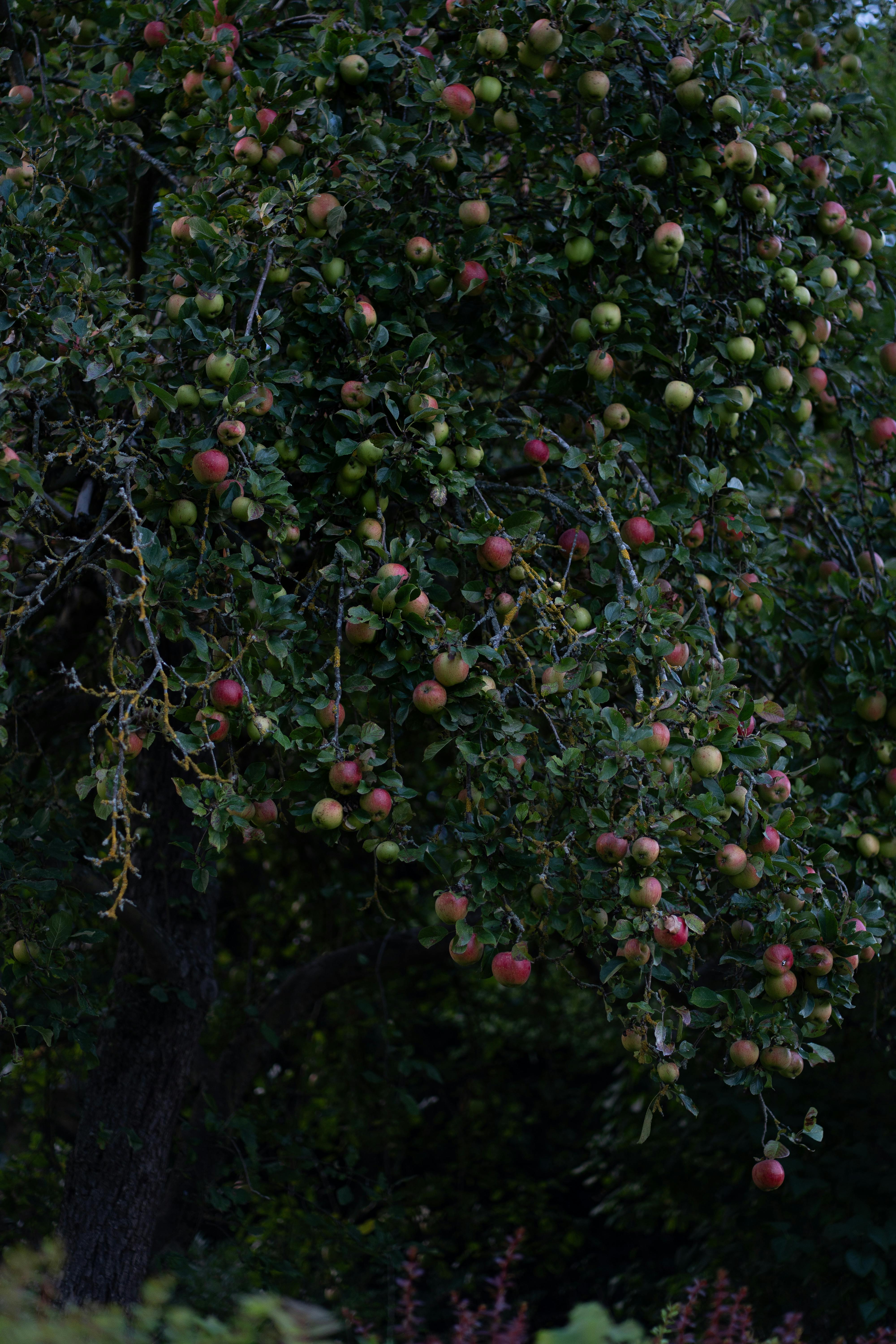
    Brief:  Write a short story (of 300 words) somehow inspired by the image of the hollow tree above (as obliquely as you like!).

    (max 300 words)

    Deadline 16th December 2025 11:59 PM

    Adjudicator: Vanessa Gebbie

    Winning Entries

    FIRST PLACE ‘The Tree of Life’ by Steven Pratt

    SECOND PLACE: ‘The Husk’ by Philip Evans

    HIGHLY COMMENDED: ‘Prey’ By Rachel O’Neill

    HIGHLY COMMENDED: ‘Tree’ By Mike Sedgwick

  • A New World

    A New World

    By Rachel O’Neill

    FIRST PLACE in November 2025 Competition

    I hurry towards the Great Hall, The November wind stinging my face. I should have had the litter and horses readied,  it never does does to deal with King Henry with red-rimmed eyes. The gossip of the marketplace is that he admires me. I confess it appeals to my vanity, that is, until I heard the words, ‘The Jewish whore does more than lend the King money, she lends her body too’.

     I am used to their envy. I could buy Winchester, its buildings, and its inhabitants many times over and they know this.

     Rounding the corner, towards the West Gate, I am deliberately jostled by two sniggering men.  I should have had one of my sons with me, or my maid, Alice. Though she is a servant, as a Christian, she is often afforded more respect than myself.

     I recover my balance and my dignity, and with deliberate slowness, I approach the Hall.  Inside the courtyard, a sudden eddy of wind pulls leaves and dust into a whirl. They dance, dervish-like. I shield my face, but when the wind drops, I am no longer outside the Castle. And the noise deafens me.  Metal carts career down the centre of the road without horses, huge stone buildings tower above me, and people clothed in strange garments walk past. They ignore me.  I am outside The Jailhouse, and it has transformed into a convivial place with men drinking ale in the pale autumn sunshine.

     What is this place? I look around and see a sign, ‘Jewry Street’. What is this new mockery? The crowd of strangers parts briefly and I see…I see a statue of myself!  I am holding the hand of my youngest, Asser. I am striding, purposeful. Strong. If this is the world I used to live in, it has changed. It has changed.

    Judge’s comments “An enjoyable read. I particularly liked the contrast between new and old. The way Licoricia was ignored also invoked something of her medieval surroundings and the modern world.”

  • Karma

    Karma

    By John Quinn

    SECOND PLACE in October 2025 Competition

    To the bored guard, disinterestedly waiving his flag, to the woman clearing cups in the now-empty cafeteria, it was clear what they saw: the usual mixture of bored and sleepy commuters onboard the 6.14am Waterloo express as it punctually pulled out of Poole station.

    At the edge of the platform, I stood stock-still, frozen by the intense certainty of what I was witnessing. Pathetically I raised my hand to acknowledge the train and my journalist ambitions disappearing from sight.

    On Monday, December 12th, 1988, my dream was stillborn.

    My great-uncle Michael, a sub-editor on the Daily Express, had got me the job interview and given me two instructions: ‘Don’t be late and don’t mention you’re an Arsenal fan. Pete Stephens, the news editor, will be interviewing you. He’s ex-military and a huge Spurs fan. He can’t abide tardiness or Gooners. Remember that and the job is yours.’

    OK, I wasn’t to know I’d wake to a flat tyre, that there be an accident shutting the A350 flyover or the traffic lights would fail on Serpentine Road… But I’d still blown my big chance. And after seven years on the Bournemouth Echo, covering council meetings and fetes, I wasn’t likely to get another one.

    With the traffic even worse and with no other option, I trudged into the Echo’s office. Bob, the paper’s rotund and perpetually harassed News Editor, greeted me. ‘Chris, where have you been – doesn’t matter! The Press Association are just reporting that the 6.14 Waterloo Express has ploughed into another train at Clapham Junction. At least 30 dead and hundreds injured. This is massive for us! Grab any photographer and get there now… Well, what are you standing there for? I want 400 words, no, 600, for final edition. Tomorrow we’ll go cover to cover on it.’

    Judge’s Comments – “Chosen for its ability to invoke not only a moment witnessed, but simultaneously the witness of self by an internalised other. A delicate rendition of interiority/exteriority, keenly felt.”

  • A Breath of Imagination

    A Breath of Imagination

    By Rose Politi

    FIRST PLACE in October 2025 Competition

    The day unfolded in radiant light, the sun gilding the rooftops while a cool breeze slipped across flushed faces. I sat on a low wall along the pedestrian street, resting as my gaze wandered to a group of girls who laughed, danced, and sang. Opposite me, a grey wall adorned with graffiti—red hearts and colorful flowers—had been transformed into a painted frame, a stage for their moments.

    The girls posed before it with that unstudied grace only youth possesses. Passersby slowed their steps; some smiled, charmed, while others watched in silent disapproval. But who can draw boundaries around the joy of the young? I wondered.

    Two olive-skinned boys, teenagers observed them from across the street. They tried to approach, speaking a mix of French and broken English. The taller one, with dark hair, bright eyes and a tattoo on his arm, proudly showed it to Emi—the girl with long blond hair and green eyes. She cast him a cutting glance and tossed her hair so sharply it nearly brushed his face. Yet he did not retreat; he kept calling her name, as though he had been waiting for her all along.

    The sun was sinking, and shadows stretched across the wall of hearts. The girls strolled up and down the walkway, the boys moving in the opposite direction. Then, as if by secret accord, Emi stepped forward a few paces, and he, with a steady stride, passed close by her. For an instant, their shadows merged inside the painted frame. Two figures leaned toward one another, as though their lips were meeting.

    And for a single breath, imagination became real.

    The End

    Judge’s comments – “Chosen for its ability to seize upon the many framings and layerings of a moment, from the play of light to the peculiar sounds of voices comingling in the air. I love the piece’s ‘secret accord’ as – to me – this speaks to the heart of what it means to witness and not merely to see.”