Tag: winners

  • Prey

    Prey

    By Rachel O’Neill

    HIGHLY COMMENDED in January Competition

     ‘Come on! Just a bit further.’’ Mother grabbed my arm and half-pulled, half-pushed me across the forest floor into the woods that fringed our village.

     She stopped in a small clearing, cocking her head, listening. A huntsman’s horn sounded far off.

     ‘Can we go home? Please.’ I whined, my legs tired, and whipped by brambles. ‘Shush’, not angry, but anxious. She looked around and then up, into the branches. Did she want us to climb the tree? How? There was no way I’d be able to scale the smooth grey trunks.

     Dismissing that idea, she thought, her face tight with fear.  ‘ This way’. I followed as fast as I could. We were in the very depths of the forest, a small light filtered through the autumn leaves. She was listening again. I knew now to be quiet.

     We followed a small stream to a part of the wood I didn’t know. ‘There!’, Mum pointed, keeping her voice low. I saw a tree with its trunk split, hollowed out. ‘In there’. She pushed me into the gap, stood back and, realising I was all too visible, she swiftly gathered storm-fallen branches and squeezed in after me. I took small, shallow breaths. Mother piled up the branches to screen us. But screen us from what?  Wolves and bears would be able to smell us before they saw us.

     ‘Silly’, mother tried to calm me. ‘There are no wolves or bears. The huntsmen have killed them all.’  ‘Then why are we here?’ She saw that, though I was only eight, I needed to know the truth. ‘The men. They didn’t want to lay down their rifles and crossbows and abandon their sport’.’ But why are we hiding, mother?’  ‘The men passed a new law.’ She said, holding me tightly and whispering, ‘This season, they are are permitted to hunt…’ ‘Hunt what?’ I prompted. ‘Women’, she said.

    Judge’s Comments: I thought this was a neat little story with great pace, which drew me in immediately and sustained intrigue right to the whiplash of that final word. A whole world is conjured in so few words. A mother has to find a place to hide in a wood with her young daughter, but hide from what? This is the unanswered question that hangs over the whole thing, weaving the thread that pulls the reader through successfully. The writer teases the reader with mentions of huntsmen, then the hint that all the usual prey have been killed – leading this reader to assume it was a case of ‘these two are being hunted for some reason – what have they done?’ – before the punch of the reveal in that final word. And then I get the awful realisation that hunting means to hunt to the death. It was not a twist in the tail in the negative sense, but a surprise all the same, and I asked to be surprised. Really nicely done. I can see a novel growing out of this scenario…!

  • The Husk

    The Husk

    By Philip Evans

    SECOND PLACE in January Competition

    I am a husk, hollowed out by neglect and relentless attacks on my very being over recent years.  My life is ebbing away even though, at 78 years of age, I might have expected to live considerably longer and to remain healthy until I am carried away by the sudden onset of a disease of the old.  Over most of my life, I have produced and raised several children, providing them with shelter and sustenance, working to protect them from harm and to ensure that they remain healthy and fulfilled in life, as I did in my younger days.  I have also provided support for many others in this interconnected world, doing what I can to help them give their offspring a good start in life and a secure future.   I have worked tirelessly for the benefit of the whole community and have been rewarded not only by seeing its various members thrive, but also by their gratitude for my efforts, often in the form of benefits in kind.

     Yet, my own children treated me with indifference in their youth, neglected me as they became established and have shown outright resentment and hostility as I have aged. They have undermined me at every turn, persuaded others to sever their mutually beneficial links with me and conspired to deprive me of the resources I have accumulated, no doubt for their own benefit.  It has been hurtful, exhausting and debilitating, to the extent that my health has suffered badly.  

     I’m happy that, despite my age, I can still give pleasure to others, particularly the young, by providing opportunities for fun and games.  But my own duplicitous family will soon learn the mistake they have made.  When I die, as I soon will, they will inherit nothing above others from me.  My entire estate will be left to the community with whom I have had such a mutually beneficial relationship.  My descendants will be left to fend for themselves.

    Judge’s Comments: There were several pieces from the point of view of the tree itself in the mix, and of these,  ‘The Husk’ really stood out. I found it most thought-provoking, as the musings of the tree, looking back over its life, mirrored so much in our own lives -especially the sadness of having ungrateful children. The piece became a meeting point for nature and human.  It made me think –  we aren’t that different, in many respects. It can be read as either tree or human. I loved the steady voice, which fitted the subject well, and the underlying note of bitterness, all going towards the creation of a solid and memorable character – culminating in the final sharp message to the tree’s progeny. I was surprised at how emotional I found the piece – especially the way the old tree feels let down by its own children, despite enjoying the ‘benefits in kind’  and sense of belonging that come from its place in the wider community. I appreciated how the writer left me to interpret what these benefits were, and how to interpret ‘community’ here – so many different ways.  I appreciated too how the writer didn’t explain – allowing me to experience the world through the ‘eyes’ of the tree successfully.  Beautifully written and thought-provoking – congratulations.

  • The Tree of Life

    The Tree of Life

    By Steven Pratt

    FIRST PLACE in January Competition

    “Be it alive?”

    “Ess, it be.”

    “Be thee sure?”

    “It be!”

    “But ’tis got a bloody great ’ole in it.”

    “An’…”

    “An’ — trees can’t live wi’ a bloody great ’ole in ’em.”

    “Zays who?”

    “Zays everywan.”

    “Well, I be someone, an’ I zay it do live.”

    “Wha’ d’ee knaw then?”

    “I knaw it be alive.”

    “How d’ee knaw it be alive, clever clogs?”

    “I don’ zee what shoes I be wearin’s got nowt t’do wi’ it.”

    “Thee knaws what I means — an’ when did a fungus ever wear clogs?”

    “That’s a queer question, that be.”

    “Wha’s queer ’bout it?”

    “Askin’ whether I got feet.”

    “I weren’t askin’ whether thee got feet, I were askin’ whether any fungus, includin’ thee, ever wore clogs.”

    “So thee do ’cept I got feet.”

    “Well… feet of a zort.”

    “Wha’ d’ee mean, ‘of a zort’? Be thee takin’ the mick out o’ me feet?”

    “Well, they be more attachments than feet.”

    “Attachments! How dares thee — they’re what grounds me, an’ in turn I grounds the tree. If I puts me attachments in acorn husks, wha’s that, if not clogs?”

    “Thee’s just makin’ stuff up now — acorn husks for clogs! An’ wha’ d’ee mean, ground the tree?”

    “I helps feed they’m, keeps they’m abreast o’ things — that’s groundin’ in my book.”

    “When did thee ever read a book?”

    “Oh, thee do ’xasperate me sometimes, thee saprophyte. I be referrin’ to the ‘Book o’ Life’.”

    “’Book o’ Life’! I’ll give thee the ‘University o’ Hard Knocks’ in a minute.”

    “So thee don’t think we’re part o’ the memory o’ this place?”

    “Hast thee ingested o’ our magic cousins — the memory o’ this place? Thee claims to be wearin’ clogs, thee claims thee knaws ’bout books. We be fungi, an’ we helps keep trees alive.”

    “So thee admits it be alive then.”

    “There bain’t no talkin’ to thee.”

    Judge’s Comments: I absolutely loved this piece. From the very first line, I was hooked by the voice, the characterisation and the surreal knowledge that I was reading a conversation between two toadstools. That has to be a first, it is so original, and after all, I did ask to be surprised by entries!  On a serious note, I know it is difficult to create and sustain a voice like this, and make it utterly ‘real’. This piece was easy to read,  clever, and 100% believable for the duration. 

  • A Disparate Situation

    A Disparate Situation

    By Johnathan Reid

    SECOND PLACE in December Competition

    The log cabin was too small for all the lives it held inside. Five saved souls, one rescuer. All female, half human. Only one had voiced their need for help. Only one could give it.

    “I’m here now,” their rescuer had said, voice as soft as her smile. “You’re no longer alone.”

    Bags and boxes filled the other bedroom, fragments of shattered lives and unwanted memories.

    “What should I do with this?” asked the daughter.

    “Just…put it down. Anywhere,” the mother said. “We’ll make space later.”

    Their rescuer asked for nothing in return, though exhaustion clung to her like a second skin. She drew strength from a stubborn mind and the unconditional love of her three dogs. Her weakness was a heart that clutched onto too much as it tried to conquer the uncaring world outside. She hid the cost even from herself.

    “You need to eat too,” murmured one of the saved, food now a comfort.

    “I ate earlier,” lied her rescuer, eyes averted and hand trembling as she cleared their plates.

    Mother and daughter exchanged frowns. “You said that yesterday.”

    An ancient phone buzzed once, twice on the stained table.

    “Is that him again?”

    “I can’t let that ghost back through the cracks.”

    “Just keep breathing. Keep yourself alive inside.”

    More silence stretched taut between them. A dog jumped from the sofa to the floor, nails tapping on the wooden floor.

    “Will you give me back?” asked the child.

    “Not to someone who never deserved you.”

    “Can he take me away?” The question pushed them all into cold, deep snow.

    “Only if you let him.”

    She paused. “Is he outside?”

    “Somewhere, yes. But he doesn’t decide your story now. You do.”

    The darkness encroached on their thin shelter of fragile hope. The world might yet split them apart, but in that moment they held on.

    Judge’s Comments: ‘A story fizzing with energy and atmosphere. There is a keen edge to this, as well as all the essentials for a short story – before, now and after.’

  • Scholarship girl, 1937

    Scholarship girl, 1937

    By Miriam Coley

    FIRST PLACE in December Competition

            Grandma calls it ‘The Parlour’. A mantlepiece holds photographs, a parade of absent males:  a wedding picture of May’s parents, Carys and Arthur, her smiling father in Kitchener’s khaki, her mother touching her pearl necklace. Another shows baby May, a crocheted bundle in her grandmother’s arms, her grandpa cradling them both. His unhandled pipe stands at the end of the shelf.

              The table is right under the window, to catch the light. May stands wearing the unfamiliar blazer.

              “It might do.” Carys says, pulling the fabric down at the back.

              “It’ll have to do.” Grandma announces, moving May around and placing her arms in an arrow shape. The form of the previous owner inhabits every pulled stitch  and hanging button.

              “Right!” Grandma says, squinting through glasses, a pin between her teeth. She begins to fold one sleeve under. 

              Then a shudder of disgust as Carys’s fingers discover an antique toffee in the blazer’s pocket. Fluff coats it, as if it is a hibernating field mouse. 

              Carys begins to cut the whole sticky pocket out, her heron shaped scissors eating the fabric. Then she picks out some material, smooth as a magician’s scarf, to create a new pocket and make the whole blazer anew.  Her hopes for her daughter live in every stitch. But, can this work?

              “May, help your grandmother peel the potatoes, please. I’m popping into town.’

    Grandma and May leave the blazer in the August sunshine.

    *

              An hour later a brown paper parcel sits on the table.

              A saucepan lid clangs from the kitchen.

              “May!” Carys calls.

    May, pink from hop-scotch, sees the parcel and also Carys’s neck, now missing the pearl necklace.

              “It’s like magic, mummy.” May says.

              “That’s a better start.” Grandma says from the doorway and squeezes her daughter’s hand.

    Judge’s Comments: ‘Lyrical yet perfectly contained, with a clear arc and resolution as well as taking place within a defined and distinct chronology. A beautiful sense of past, present, and future, and a journey of hope.’

  • A New World

    A New World

    By Rachel O’Neill

    FIRST PLACE in November 2025 Competition

    I hurry towards the Great Hall, The November wind stinging my face. I should have had the litter and horses readied,  it never does does to deal with King Henry with red-rimmed eyes. The gossip of the marketplace is that he admires me. I confess it appeals to my vanity, that is, until I heard the words, ‘The Jewish whore does more than lend the King money, she lends her body too’.

     I am used to their envy. I could buy Winchester, its buildings, and its inhabitants many times over and they know this.

     Rounding the corner, towards the West Gate, I am deliberately jostled by two sniggering men.  I should have had one of my sons with me, or my maid, Alice. Though she is a servant, as a Christian, she is often afforded more respect than myself.

     I recover my balance and my dignity, and with deliberate slowness, I approach the Hall.  Inside the courtyard, a sudden eddy of wind pulls leaves and dust into a whirl. They dance, dervish-like. I shield my face, but when the wind drops, I am no longer outside the Castle. And the noise deafens me.  Metal carts career down the centre of the road without horses, huge stone buildings tower above me, and people clothed in strange garments walk past. They ignore me.  I am outside The Jailhouse, and it has transformed into a convivial place with men drinking ale in the pale autumn sunshine.

     What is this place? I look around and see a sign, ‘Jewry Street’. What is this new mockery? The crowd of strangers parts briefly and I see…I see a statue of myself!  I am holding the hand of my youngest, Asser. I am striding, purposeful. Strong. If this is the world I used to live in, it has changed. It has changed.

    Judge’s comments – “An enjoyable read. I particularly liked the contrast between new and old. The way Licoricia was ignored also invoked something of her medieval surroundings and the modern world.”

  • Great Patience

    The fantastic Toby Litt set and adjudicated our competition this month:

    Brief:  The phrase they should respond to is: “‘A story in which a character shows great patience?’

    And the winners were…


    First place: ‘The Ox’ by Mike Sedgwick

    The waning moon was two nights past full when old Mbele arrived outside Desalu’s hut, assegai spears in one hand and his shield in the other. 

    ‘You promised to return my ox by full moon, Desalu.’ 

    ‘I’m a busy man, Mbele, come back in the morning.’ 

    Mbele remained outside Desalu’s hut, standing first on one leg, then on the other, sometimes leaning on his assegai. The moon set, and in the darkness, he heard animals roaming around outside the kraal. As the morning sun rose, Desalu appeared, hustling and bustling, always in a hurry to be somewhere else. ‘Maybe tonight,’ he said and went to his fields. 

    Mbele stood. Desalu’s wife, wearing her largest earrings and many beaded neck bands, motioned him to enter the hut, but Mbele knew he would never see his ox again if he went with her. The sun’s heat scorched his skin. Desalu pushed Mbele aside when he returned that evening. 

    Two dawns later, Desalu emerged gingerly from his hut, avoiding Mbele’s gaze. 

    ‘You still here?’ 

    Mbele stood, waiting, expecting, hoping. To pass the time, he scratched patterns into the dusty earth with his assegai: home, food, and ox. 

    The next night, he heard raised voices inside the hut. At dawn, Desalu emerged scowling and shoved Mbele to the ground.  

    ‘Get out of my way, old man,’  

    Desalu’s wife shouted after him, ‘You should be ashamed of yourself, treating him like that.’ 

    Desalu’s wife brought Mbele water and a bowl of mashed beans to eat. As the crescent moon rose, he picked up his assegai and shield and prepared to leave. His ox was lost. Desalu would never return him. As he left the kraal, he saw Desalu approaching from his toils leading the ox by a tether. He handed the tether to Mbele without a word and firmly touched his shoulder. 


    Second Place: ‘The Patience of a Saint‘ by Dominique Hackston

    Our first visit to the dementia assessment ward proved scary. Mum and I were sitting in an awkward silence when an old man barged in, a doll in the crook of his arm. He hid behind my chair. 

     A nurse in close pursuit knuckle grazed the door. ‘Sorry!’  she mouthed. ‘Common on John this isn’t your room.’ 

    John thrust the doll at me and dug his bony fingers into my arm. ‘Protect me! She’s trying to hurt me.’   His voice trembled.  

    ‘Oh? I side-eyed the nurse, wanting help. 

    The nurse edged forward. ‘John you can’t give Baby Mary to strangers.’ 

    John’s eyes darted from me and the doll, to the nurse and back. I proffered Mary. He snatched her with his free hand and smothered her in a hug. 

    The nurse motioned for her support staff to back off.  

    ‘Help me.’ His vice-like grip dragged me.  

    I winced and allowed him to lead me into the corridor. We wandered up and down, trying every door at least three times. The nurse followed, reassured me, kept the staff away, and cooed at John.  

    ‘John,’ the nurse tried again, ‘why don’t you let the lady go.’ 

    ‘So, you can hand cuff me?’ 

    ‘No handcuffs.’  She eared her trouser pockets. 

    John glared at her tunic ones.  

    ‘Just tissues,’ she said. Her hands slowly provided the proof. ‘How about a cup of tea?’ 

    I winced as nails stabbed my biceps. ‘She comes too.’ 

    ‘She wants to go to the toilet, first.’ 

    ‘Do you?’ He demanded. 

    I nodded. Just like that, I was free.  

    The nurse shooed me away with her eyes, guided John to a chair, and handed him a cup of tea.  

    Relieved, I returned to Mother. ‘That nurse needs to polish her halo.’  

    ‘Indeed,’ replied Mum, munching her invisible sandwich. ‘Paciência Santos is my favourite nurse.’ 


    Third Place: ’Uile-Bhèist’ by Dave Sinclair

    When I came to this place, both it and I were young. I met many creatures in the ancient seas and watched them take their first steps onto the sandy dunes, then into the swamps and beyond.  Gradually they learned to colonise their world, to cross the arid deserts, to climb the fiery mountain ranges and even spread their wings and soar from one land mass to another.  I watched over them, like a patient and doting parent. 

    While I waited for their minds to grow, I took their form. I was cautious, for many of them were violent. Time passed, and the creatures became more cunning, more violent, more agile and more malicious.  They ate flesh, even if it was their own.  But their minds remained dull, incurious and ordinary. I could not talk to them, for they had nothing to say. They were easy prey.  I ate well, hunting in the seas and on the margins of the river, making the cool darkness of the waters my home as I watched and waited. 

    One day the asteroid came. The skies grew dark, and the creatures choked and died.  Safe, hidden in the deep abysses of the oceans I slumbered for many years. When I awoke, new creatures ruled the land.  I sensed their intelligence, their determination to explore, to understand and command their world.  Surely there would be one amongst them who could sing my song for me.  And yes, there she was – a mind so crystal clear I could hear her thoughts half a planet away. 

    And thus, I travelled to the land she called A’ Ghàidhealtachd, to the shore of Loch Nis, the place of her home.  And she sang for me a song, so pure, so shining bright, it could be heard across the stars – the song of a siren, beckoning, inviting, calling to those from afar. 

    Soon, the silver ships will come.  Then will be the time for breeding. 


    A huge congratulations to our winners and thank you to everyone who submitted!!

  • The wind was colder than the stars in winter

    The talented Matt Wingett set and adjudicated our competition this month:

    Brief:  The phrase they should respond to is: “The wind was colder than the stars in winter.” This can be anything. A poem, flash fiction, an outline for a story, a dialogue, (400 words) 

    And the winners were…


    First place: ‘Banshee Weather’ by Sophie Hetherington

    The wind was colder than the stars in winter. And I hate the wind. Give me rain but save me from wind. Whipping my hair mockingly around my face, a blizzard of hair in my eyes, mouth, lifting hanks of it around my head like Medusa’s snakes, defying gravity. My own features set in a grimace befitting that tortured goddess. Ears ice burned, draughts funnelling up my sleeves. Invading the gaps in my too-thin scarf to chill the back of my neck. I’ve heard school teachers say the wind makes kids feral – can’t be settled once back in class after the exhilaration of being buffeted and blown like leaves around the playground. I reach the house and a gust slams the door shut after me in one last insult. It’s a little quieter in hall as I take off shoes and coat, scrape hair off my face and catch my breath. But not quiet enough. The wind still buffets the house, forcing tiny banshee screams through every minute crack around the badly sealed windows. I can’t settle either, but not from energised elemental excitement; the wind disturbs me, my nerves frayed by the erratic noise of thick swirling air that will not let up. It continues into the evening; I have terrors over the ancient chimney stack, trying to work out its trajectory if a particularly vicious gust were to topple it. My thoughts are scattered, concentration fractured by the tinny reverberations coming down the metal chimney flue. I must have dozed off because later I wake and what confronts me is the absence of sound – it is silent at last – I can feel the still space inside my skull, the tension leaves my body. Tip-toe to the window to look out, and, clean silver pin pricks in a luminous ink blue sky, I can finally see the stars.


    Second Place: ‘The Starry Night by Maggie Farran

    The picture had always been hung above the fireplace at the home, where she had been born. It was a cheap copy of ‘The Starry Night’ by Vincent Van Gogh. As a small child she had stared at it for hours, fascinated by the bright yellow stars set against the dark blue sky. She had looked at the little village in the distance and wondered what it was like to live there. Would she have attended the church with its tall steeple? Would she have climbed the mountains in the distance? She had loved the whirls around the stars and. The movement in the night sky.

    As she got older, she had tried to copy the painting. She had sat at the oak table in the living room with her felt tips and sketch book. Recreating it had been her passion, until she reached the age when she had her own paints and canvas. Then she had chosen her own subjects and style. She painted flowers in a detailed controlled way. They were beautiful and sold well. Everything about them reflected how she lived her life. Now both her parents had died, and she was back in her old childhood home, gazing up at the painting, that had meant so much to her, that had inspired her to become a painter.

    The grief for what she had lost and what she had become was wrapped around her like the most bitterly cold wind. Where was that free-spirited girl, who whirled and twirled like the stars in the painting? What had changed her into this precise, tight person? Her flower paintings were the result of painstaking work. Everything about them was perfect, from the colour of the petals to the shape of the leaves. They were treasured by collectors for their accuracy. She shivered at the coldness of how she saw herself now. She was able to appreciate the delicate beauty of the flowers she painted, and reproduce them perfectly with the gift, she had been given. Every exquisite detail was there, but the vibrant, swirling, whirling stars were just out of reach.


    Third Place: ’And Then The Wind’ by Val Harris

    but before that, you were the surest

    you’ve ever been. A brilliance in your eyes

    like all the planets had collided there.

    Air and sky as clear as a lucid mind.

    An upbeat heart, a steadfast belief,

    and then the wind.

    The relentless, flailing sod of it. A bite

    only a Yeti or a ghost, could endure,

    and even they are nowhere to be seen.

    How long will it last? How long before

    the roar and withering freeze engulf you,

    turn you into a sculpt of ice,

    unable to move your frosted lips,

    desperate for words, but too afraid

    your voice will shrivel and die?

    And then the wind, turning triumph

    over with its vicious breath,

    deadly as a breeze on Uranus.


    A huge congratulations to our winners and thank you to everyone who submitted!!

  • Experiences, discoveries, and unexpected travel moments

    The amazing Natasha Orme set and adjudicated our competition this month:

    Brief:  Travel isn’t just about places – it’s about experiences, discoveries, and unexpected moments. Sometimes, the best (or worst!) moments happen when things go completely off track.

    Maybe you got hopelessly lost and found something incredible. Maybe bad weather ruined your perfect itinerary, only for an unplanned detour to become the highlight of your trip. Or perhaps the reality of a long-dreamed-of destination didn’t match the fantasy, yet taught you something unexpected.

    It could be funny, unsettling, heartwarming, or eye-opening – just make it real. No postcard-perfect moments. I want to see the messy, unpredictable, and wonderfully human side of travel.

    (400 words)

    And the winners were…


    First place: ‘Night Watch’ by Christ Youle

    Frozen. Shivering through layers of oilskin, fleece and wool. Alone at three in the morning, in the middle of the Bay of Biscay, solely in charge. The responsibility crushes my tingling nerve endings. Can this really be happening? But I have to keep us alive.

    The forecast had been wrong. Expectations of a blissfully calm introduction to night-sailing shattered.

    My first night watch. Pitch dark, blacker than any imaginable black. Wind scorches through me, sails scream and clatter around me. Nature more violent than I’ve ever experienced. My every sinew screams with terror. Water drenches me from all directions. Waves smack and splash, rain streams. Everywhere. Muscles I didn’t know I had sear with the effort of staying upright. My only friend is my next ginger biscuit. All I can stomach to counter the waves of nausea.

    Three hours focusing on where I think the sea becomes the sky. Three hours imagining dark shadows of boats heading straight for us. Three hours of seeing odd lights appearing and disappearing, of thinking I am going mad. The longest three hours of my life.

    Finally, shift change. My new mid-life husband, Pete, appears rubbing his eyes and beaming.

    “Everything OK?”

    “Fine,” I lie. “No problems.”

    I stagger down the steps, suddenly tasting salty ginger on moistening lips. Energy magics itself from nowhere as I scamper into the still-warm sleeping bag. I burrow as far

    down as possible. Safe, hiding, not responsible. At least if we drown in the next three hours it won’t have been my fault. Sleep descends miraculously.

    Three days and nights. The relentlessness and adrenaline surges totally drain my resources. Sustained terror alternating with desperate snatched sleep. On our fourth bleary-eyed dawn, the bouncing horizon reveals the distant estuary leading to Ribadeo. It isn’t A Coruna, where we’d been planning to land, but it’s safe. To head away from the relentless raging of the sea to the blissful beckoning of the ria is heaven.

    “Where’ve you come from?” asks the woman on the next boat as we stumble around, tying up.

    “Salcombe,” Pete replies.

    “Oh wow. How long did that take you?”

    Forever, I think. “Just three days.” says Pete breezily. “It was a really good crossing. Perfect wind on the nose. Made six or seven knots most of the way. Couldn’t have been better.”

    I feel quietly proud. Then utter exhaustion takes over.


    Second Place: ‘Flamingos’ by Mike Sedgwick

    ‘There are flamingos up country in Mannar. I want to see them,’ stated my wife.

    I’m happy in Kandy, reading and watching the fish eagles over the river. The barman knows when to bring me another ice-cold beer. I must give up this leisurely life to travel the pot-holed roads in a car whose air conditioning heats the air. After six long hours, we are driven across the bridge onto Mannar Island where wild donkeys scratch themselves on baobab trees.

    At dawn the next day, we set out for where the flamingos are. At the tip of Mannar peninsular, a lone soldier with a WWII rifle defends Sri Lanka from an Indian invasion. Across the shallow seas and sandbanks of Adams Bridge, India forms a smudge on the horizon. A flock of stints run back and forth on the beach, avoiding the waves, stopping to peck at tiny crustaceans.

    Nowhere in the green scrub, the black brackish lagoons behind us, the shimmering sand and the blinding blue sky, is there a hint of the salmon pink we seek. It would be a wild goose chase if flamingos were geese.

    Back at our hotel, before breakfast, the young man on the desk explains, ‘I know where they are. I’ll take you there tomorrow morning.’

    Another dawn start when the air is cooler. We drive along tracks and around dunes and stop in an area of sand and scrub. With feet dragging in the sand, I think of my bed, checking the cricket scores on my iPad, waiting for breakfast. Instead, we creep past a dune. ‘Shush,’ whispers our guide, ‘move slowly.’

    Around another dune we see a brackish lagoon with a pink cloud of feeding flamingos, brilliant against a backdrop of dark trees. Their grunts, growls and honks float across the water and we watch their heads rise on their long necks to look around. Shuffling in reverse with their backwards-pointing knees, their feet disturb the water creatures which are gobbled up through inverted beaks. The black-tipped beaks rise up as they swallow their prey. Some know-it-all explains that their knees are actually ankles that bend that way.

    Thousands of pink rumps with black beaks are busy feeding in preparation for migration across Adams Bridge to India.

    Cricket scores? Ice-cold beers? Who cares? After this spectacle of nature, I need tea and my customary buffalo curd with thikul. I’ll come again, tomorrow.


    Third Place: ’The kindness of a stranger’ by Nicola Pritchard-Pink

    In the midst of the airport security queue, I sat crumpled on the floor, quietly crying with exhaustion, emotionally and physically defeated. How did I get here? This was not how I started.

    *                     *                     *

    Mid-afternoon one week earlier I confidently strode out of Düsseldorf airport, smiling at the prospect of my first ever lecture tour. My body fizzed and tingled with adrenaline and excitement – it was really happening. The tour took in three locations – Düsseldorf, Essen, and Münster – and in each city I would be met by locals who would show me around. I couldn’t wait.

    Ingrid was my first guide, who welcomed me to her beloved city, pointing out ancient towers, sunny riverside views, and, best of all, the gabled cream-fronted pub where she had her first kiss. The day was a whirlwind of modern art, Baroque churches, Nazi victim memorials, and local breweries, creating a sensory torrent: colourful Kandinsky contrasted with marble-white cherubs; haunting air raid shelters consumed along with frothy, dark beer. In the evening I gave my talk in a beautiful historic room, hung with chandeliers and lined with cabinets of priceless porcelain. What could be better than this?

    My magical experience continued in the next two cities, where again I was greeted at the station and again pampered by my hosts, leaving me feeling as if I were a celebrity.

    But cracks started to show on the last day. I have an auto-immune illness which means I run out of energy easily, and unfortunately my polite requests for a break were lost on my brilliantly enthusiastic hosts. By the end of my lecture I was really weary, and by the time I got to the airport the next day, I had officially run of out of juice. Dragging my heavy suitcase, which inexplicably now only had one working wheel, I slugged my body to the check-in desk. My legs felt leaden, and every step was like walking through thick treacle. No-one seemed to get what I was I saying and waving my sunflower lanyard didn’t help. By the time I got to security I had almost nothing left. I found myself collapsing down on the floor feeling desperate for someone, anyone, to help me. And it was just then, when I felt hopeless and unseen, that I heard a woman’s voice ask if I was OK, telling me she’d help me and stay with me. Tears filled my eyes with this simple but deeply profound act of kindness from a fellow traveller, beautifully proving how when we travel, we all have the potential to truly change someone’s day.


    Highly Commended: ’Rebel Rebel’ by Lowri Rylance

    Neither Mum nor Dad raised an eyebrow when I told them that I was quitting my nursing job to go travelling. I’d gained more than enough qualifications and experience to work my way around the world. There was nothing I could do to shock them, there was no rebellious teenage phase for me. Their own parents had cut them off decades earlier; the tattoos, piercings, drugs, teenage pregnancy and prison sentences had been too much for my devout Catholic grandparents, and I had never met them – we didn’t even know if they were still alive. My parents hated religion and thought that it was the cause of all that was wrong in the world, believing that the church had turned their parents against them.

    I’d thought nursing was the answer; I loved caring for others, and even though the shifts were long and arduous, the stories were harrowing, and the pay was low, I enjoyed it. But there was always something missing, and the nagging voice coming from the centre of my chest telling me to keep searching was never silenced. Mum and Dad said that I needed to find my soul mate; they believed that they had been together through numerous past lives and reincarnations and thought that the love of a partner was all that was missing from my life. I had never believed in fairy stories, and had no faith that a handsome prince or princess was out there looking for me.

    I hoped that a jaunt around the world seeing sights I couldn’t even begin to imagine, would be the answer, and I would finally feel complete. I crossed out country after country on my long list, meeting hundreds of people, experiencing the divides and chasms between the rich and poor. I was welcomed by all, especially those traumatised and hurting as they found solace in my calm manner, and the time I spent just holding their hand, unable to communicate in any other way because of the language barriers.

    Now I was on my way home, back to London, to face my parents with the news they would never expect to hear from me. I feared their reaction but knew that my newfound faith would see me through, when I told them that I had found God, and would shortly be entering a convent in Italy as a novice nun.


    A huge congratulations to our winners and thank you to everyone who submitted!!
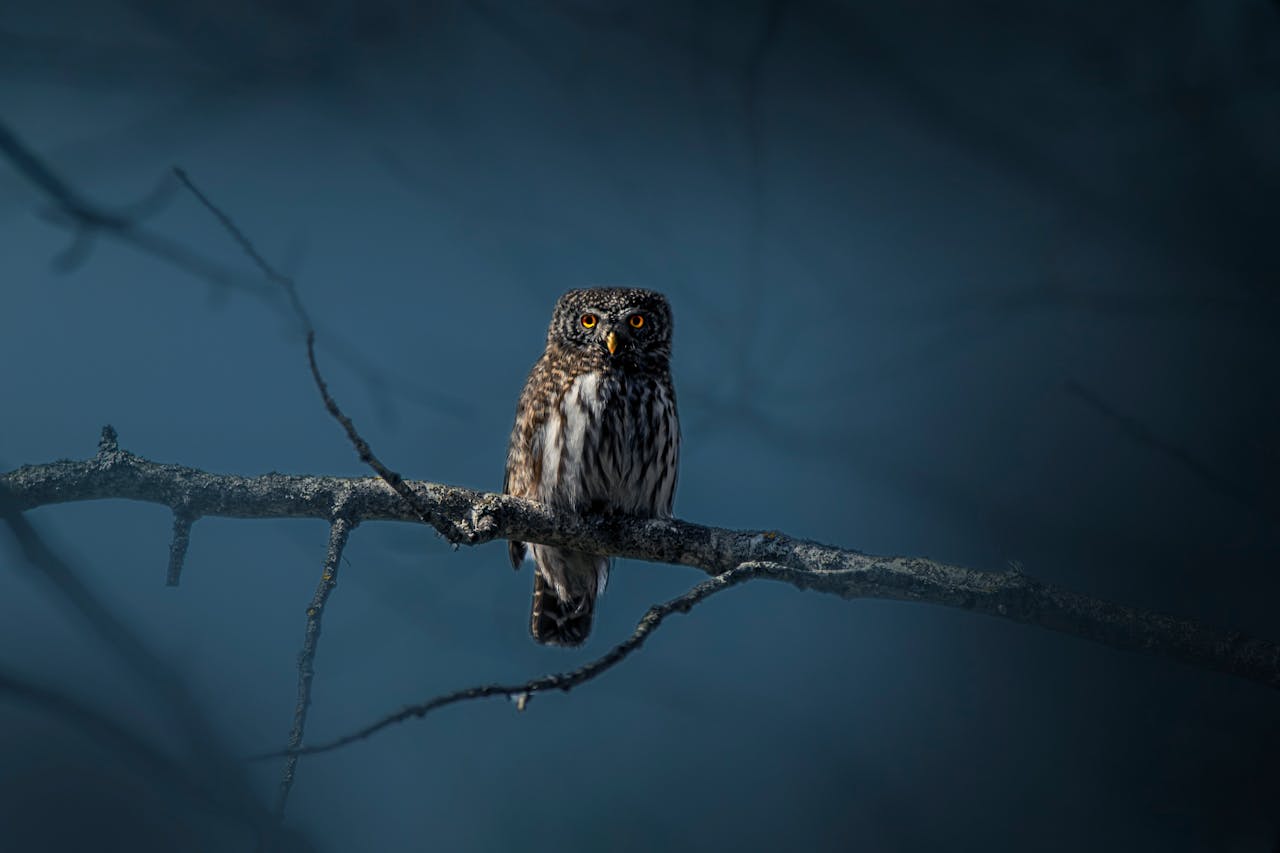
  • Write about an animal!

    The lovely Damian Kelly-Basher set and adjudicated our March competition:

    Brief: Write about an animal. You can write from the viewpoint of the animal, yourself, or another person/thing. 

    But you cannot use the letter ‘e’ anywhere in your work. (300 words)

    And the winners were…


    First place: ‘Woof’ by Viv Smith

    Sniff. Run, run hard. Run with stick. Bark, bark again, mad, bark loudly. Sshhh!

    Man looks cross. Wait, wag. Wag lots. Told to sit. Sit. Twitch a bit. Pant, pant hard, drool. Anticipation is good. Ball thrown far away; watch it land. Told to go. Run fast and swift to ball, sniff, grab, turn, go back to im. Man happy patting, rubbing, wag lots. Drop ball. Fun, sit. Try not to twitch too much. Wait for throw two, it lands a long way away. Run hard.

    Brown dog on grass, not good. Big brown dog grabs my ball, runs to his man. His man says “No!” Brown dog should drop ball, but brown dog runs backwards and forwards, not dropping it, but crouching down, wants to play with man.

    I wait, bark, wag, look around hoping for my man to act, but still too far away, chatting. Want him to talk to brown dog’s man. Pant, drool a bit, worry. Brown dog knows it’s my ball, runs around in front with it in his mouth, wagging, taunting, still gripping it in his jaws, not putting it down. Knows this is annoying. I crouch, could I fight him for my ball? Try a growl with a bark, if brown dog barks back ball could fall. Is brown dog that stupid?

    Brown dog is dumb. Ball drops barking back. I zoom in to pick it up and dash to my man for back up support. My man is still chatting to a lady, but stoops to pat and rub fur. Both happy now.. Wag lots.

    Man stops talking, grins, turns, walks across grass, I run and sniff. Walking along path I think of food from man soon, good thought, wag again.


    Second Place: ‘Val and Anna’ by Wendy Falla

    My provision from Mum’s will didn’t hold much worth,

    ‘What was it?’ you may ask,

    Ah … with conditions and instructions, two long living and robust, grumpy old Torts! Known

    as Val and Anna (mum’s aunts), a fourth birthday gift and now my priority to spoil. Inhabiting

    an orchard run, built by dad from old scaffold planks and long nails, days pass munching

    Marigolds and pink Marshmallow blossom, oblivious to world chaos. Dinosaur jaws of horny

    rims clamp around young tomato plants and spinach sprouts, rich in iron, trailing from grow

    bags.

    A book from mum, noting habitat, habits and traits, instructs that a shallow warm oil bath

    (Virgin no doubt!) is a must in spring to sooth crusty limbs post a dormant six months. A

    vitamin shot prior to a coming out party and contacts for torty pals to ask along.

    Dusk brings both along a grassy path to an old quail shack on stilts, slowly up a ramp, in

    through an archway to a straw clad cocoon. Slow blinking at sundown, grunts turn into faint

    snoring, torty bliss. In Autumn, as days grow cold and with a chill in the night air, I must stop

    this pair burrowing into Ash and Poplar roots at our boundary, fast work for scaly nails

    digging through claggy clay soil – or Val and Anna will vanish on to common land, God

    forbid they should drown in a pond or pool!

    Flourishing and vigorously tackling anything blocking paths – cats, dogs, plant pots, humans

    – ploughing right on through with gusto! Mum (gran) is watching and waiting to haunt us,

    should Val and Anna pass away during my acquisition. My adult sons pray I outlast Val and

    Anna – although big son wants my piano and young son my sports car


    Third Place: ’A Stick, Stuck’ by Jacob Watkins

    I sprawl, stuck in this mud. A stick, stuck, so soon unstuck from that stout oak standing almost within touch of my spindly twigs, though also agonisingly afar. Afraid, I was, of such biting wind that blows through our park – and still I did strain outwards, gloating at low, land-plodding louts, till a strong gust brought a snap –

    What is that sound drawing in? A sniff, a scratch, purporting a snort. A shaking in my dirt, a shifting through this rusting mulch; thrumming, four fat paws, swishing scimitar-tail, pink, sloppy limb lolling from drooling mouth; I must run! But it is not a stuck stick’s lot to run.

    Hush – I should stay still, praying that vulgar snout won’t find out I am at risk. Old oak, why art thou so disloyal? My growth was in your honour, my triumphs your own – but now I rot amongst your roots, as this Satan-born thing of fur and fury draws towards my limp form.

    Good lord, I whiff its guttural panting. What foul concoctions must this glutton gulp down? Stay firm, my tumultuous bosom, hold fast, salvation still may show. But it shan’t! For its body has struck out sunlight and shrouds this land in dark! All is lost, within my assailant’s cold, murky domain, as it bows its skull and unlocks its nightmarish maw – my world is now fangs and spit –

    I pass out, for how long I do not know, but a touch of flowing air brings back our blissful world. Although, I am not hanging from my oak, but racing rapid as a brook across grass and rock, with only a slight pinch from my saviour’s thoughtful jaws holding my body tight. Now, I do not simply grow, but fly – I, a stick, and from mud I am truly unstuck.


    A huge congratulations to our winners and thank you to everyone who submitted!!