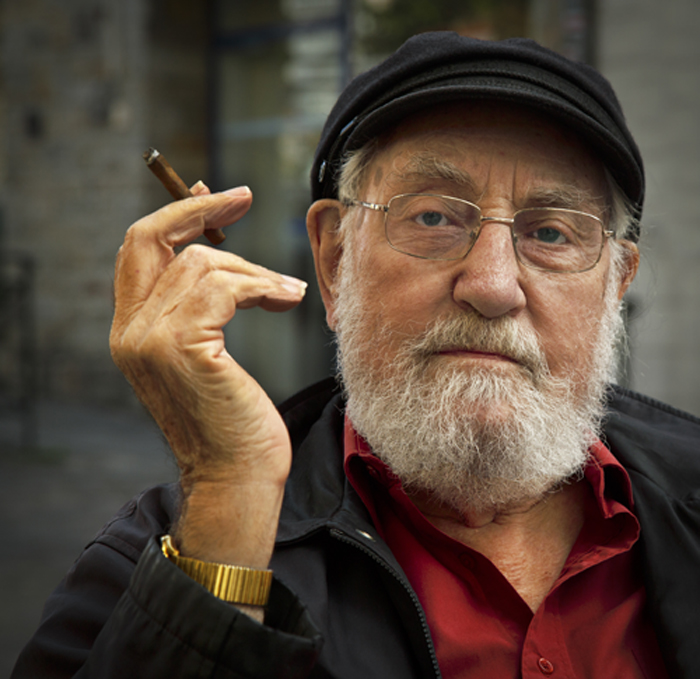
For our March meeting, we’re delighted to welcome as our main speaker the current Hampshire Poet, Damian Kelly-Basher. With two speakers who are performers, this should be a lively and entertaining evening.
Damian is an experienced spoken word poet who has performed around the UK including Royal Albert Hall, Edinburgh Fringe & WOMAD. He’s also an experienced events/workshop facilitator, running creative events and sessions for people of all abilities and backgrounds.
He’ll be talking about the role of the Hampshire Poet (among other things).
Our guest speaker for the evening will be poet Abanti Chakrabarty Mukhopadhyay. As well as being a poet, Abanti is an academic (focused on education), a radio presenter, web-designer, dancer and performer who speaks four languages.
She’ll be introducing us to Bengali epic poetry — including a dramatic performance.
Damian will be setting and judging this month’s competition, the results of which will be announced at the meeting. Be sure to come along if you’ve entered. If you’re placed, you get a nice certificate (as well as glory).
The meeting will be Tuesday March 11th, at the Tower Arts Centre. Come along from 7:00pm. Talks start at 7:30pm. Members free, non-member tickets £10, students £2 (no advance booking, payment on entry).
Tuesday 10th December 2024 from 6.30pm followed by talks at 7.30pmat the Tower, King’s School, Winchester.
It’s an opportunity to meet, network and chat to authors and members of HWS.
Authors from the HWS will be displaying their books at the Book Fair along with an indie publisher. Come along, meet them and show support for fellow writers!
Jean G-Owen
Jean G-Owen, our guest speaker on the evening, her talk entitled ‘From Conception to Compilation: Publishing a Poetry Collection’. She will be promoting her new poetry collection, The Pain of Glass.
NAKED FIGLEAF PRESS, founded by Jean G-Owen in Summer 2023, is an indie publisher based on the Isle of Wight. They specialise in poetry, novellas, short stories and non-fiction collections. They publish The Figlet, a bi-annual literary magazine showcasing Isle of Wight writers & illustrators. Naked Figleaf Press host Yarnival West Wight WordFest. xhttps://nakedfigleafcollective.co.uk/publications/
Anne Wan
Anne Wan, children’s writer and independent publisher, and author of the Secrets of the Snow Globe trilogy and picture book, Manners Fit for a Queen.
Anne began writing when her middle son became ill. As he convalesced she helped him transform an idea that he had, into a book. This ignited her enthusiasm for writing stories for children. She started writing picture books as a hobby and went on to study creative writing with Barbara Large. Anne is passionate about inspiring children as readers and writers. She enjoys giving talks, craft and storytelling sessions in schools, libraries, and Brownie groups.
Having completed the Snow Globe trilogy, Anne released her debut picture book Manners Fit for the Queen. In this humorous story, Hector causes chaos with his terrible table manners. His sister, Isobel, has found her own way to cope with the mess. But how will she cope when they are both invited to a tea party with the Queen?
Secrets of the Snow Globe – Menacing Magic is the finale to my ‘Secrets in the Snow Globe’ series. Chaos rages in the world inside the snow globe following the theft of seven, magical, diamond snowflakes. In a race against time, Louisa and her brother, Jack, shrink into the globe and embark on a perilous journey to catch the thief. Can they retrieve snowflakes before the snow globe world is destroyed?
Secrets of the Snow Globe – Vanishing Voices Can they succeed in their quest to help their new friends, and find a way back to Grandma’s house? A captivating adventure story of courage and friendship for 7-9 yrs. In a land of magic, snow, and secrets Louisa and her brother, Jack, are flung into a dangerous mountain adventure when they shrink into their Grandma’s snow globe.
Secrets of the Snow Globe – Shooting Star
How much does Grandma know about the snow globe’s magic? Louisa and her brother, Jack, are determined to discover the truth. In this sequel to, Secrets of the Snow Globe – Vanishing Voices, Grandma’s story is revealed. But how much should she tell? After all, some secrets are best left untold…
Martin Kyrle was at Agincourt – not the battle, but at the official opening of the museum. His personal travel anecdotes – all of them true – span seven decades and will take you off the beaten track even if you’re familiar with the countries where they take place.
Islands off the coasts of France, Holland or in Lake Baikal, the world’s deepest lake, castles in Estonia and Latvia, lakes in Lapland, Lithuania and Siberia, Roman amphitheatres in Libya, Neolithic dolmens in Brittany or monastic ruins 8 miles out in the Atlantic off far SW Ireland. Then being hospitalised in intensive care in the Canary Islands or facing a Force 8 gale on the ferry from Hong Kong to Macau and a total blackout in Mongolia when the lights fused..
Finding soldiers bivouacking in his back garden prior to embarking for the Normandy Landings (but who hadn’t been told!), then trying to get to school during the ‘great freeze’ of 1947 contrast with exploring Mycenaean tombs in Cyprus or volunteering in a refugee camp in Austria and a workcamp in Poland. Hitchhiking round North Cape at the top of Norway was quite tricky, too. [Why go? Well, it’s the northern limit of Europe and if you go any further you fall off…].
He had to mind his manners when, as a Sub-Lieutenant in the Special Branch stationed in Malta to decode top secret communications, the Commander-in-Chief, Admiral Lord Mountbatten, invited him to dinner. At university in Southampton a contrasting challenge was singing a duet from La Bohème in front of a couple of hundred disbelieving fellow students who’d sneered that although he and his fellow artistes could sing Gilbert & Sullivan they couldn’t sing ‘real’ opera. After that, getting lost on a train in Western Bosnia, being locked in a church in rural Devon or standing with your school party watching your train from Germany into Denmark depart without you were minor misadventures you took in your stride.
He ascribes his good fortune and possibly survival to having been blessed by the Pope in St Peter’s Square in the Vatican in Rome, by the Patriarch of the Russian Orthodox Church in the Kremlin in Moscow and by an indigenous Buryat shaman in Siberia who gave him a lucky charm, which you might think is hedging your bets for someone who’s a life-long atheist. But perhaps they saved him when he had to overcome vertigo when standing on the top of the leaning tower of Pisa and when, 10,000 feet above the South China Sea on a flight to Beijing with his late wife, the pilot announced that one of his engines was showing signs of failure.
Martin Kyrle’s Little Green Nightbook, Little Blue Nightbook and Little Orange Nightbook each has 25 personal stories to intrigue you, with flags, maps, colour photos and cartoons. His other books, Jottings from the Trans-Siberian Railway and Jottings from Russia and the Baltic States. Part 1: Russia and Estonia.
Page Dalliance
Page Dalliance is a writer, editor and designer who became an author by chance. Having lived in and around the New Forest and the Test Valley in Hampshire for most of her life, where she married and raised her 3 children.
During this time she developed a design career and a thirst for knowledge, not present in her early school days, and consequently put it to good use in her future projects and exploits to improve her lifestyle. Always up for a challenge where an opportunity presented itself, these were probably stepping stones for later adventures as a single woman where choices had to be made and calculated risks undertaken.
This debut novel is based on the experiential events witnessed on her later travels when dipping her toe in to the tepid Greek waters for the first time at the age of 50 plus and then consequently ‘pushing the boat out’.
Further publications are planned featuring design and building challenges both at home and abroad.
Her new book, A Perfectly Respectable Pirate, a novel set in Greece is based on a true story.
Clare Fryer
Clare Fryer, YA author, her book, The Invitation.
Clare grew up in Guildford surrounded by books. She was inspired to write by her father, who was a poet and author himself in his spare time. Clare doodled poetry throughout her life, yet yearned to write novels but never had the time. When Clare took early retirement in 2022, she finally had time to write. The Invitation began as a short story inspired by a writing prompt and won a monthly writing competition. Her mother and several friends asked what happened next, and so she began to write. That short story became the first three chapters of The Invitation.
One invitation changes everything. The arrival of a mysterious invitation on the eve of Millie’s sixteenth birthday sets off a chain of events that will change her life forever. A family linked by secrets discover a darker, more sinister undercurrent of corruption in Anacadair. How far will the ruling High Council go to preserve the old ways? When the family flee, who can they trust? Will they escape from the watchers?
Mark Eyles
Mark Eyles’ science fiction books ‘Icefall Cities’, ‘Firedrift Moon’, and ‘Stellar Megastructure’ (graphic novel) are available on Amazon. A fantasy novel will be available soon.
Previously, he was a hippy, punk, teacher, entrepreneur, freelancer, holographer, videogame designer, company director, lecturer, and researcher. He’s been published in 2000AD, Sonic the Comic, and Fear magazine.
Damon Wakes will have his collection of published books available, includingTen Little Astronauts – An Agatha Christie-inspired murder mystery novella set on board an interstellar spacecraft.
Damon writes everything from humour to horror and produces a brand new work of flash fiction every day during July each year. Damon also writes interactive fiction and games, and provided the story and dialogue for Game of the Year nominated virtual reality title Craft Keep VR.
Order and Chaos, an anthology from Breakthrough Books that opens with one of his flash fiction pieces. That story is “Songbird and Statue,” which also provided the anthology’s theme.
Ancient gods in conflict and a zombie on welfare, a disappearing boyfriend and AI with daddy issues, a balloon bound for icy danger and a mysterious theft at the museum, a sinister woodland cabin and a pleasure house that’ll cost much more than you can afford.
Raiding parties in dystopia, art classes in the city, opposites attracting and love catching fire. Separations and siblings, life and death decisions, flying into trouble and traveling to self-discovery…Which comes first, chaos or order? The cycles between may seem inevitable, and change may be the only constant, but what does that mean for the human experience?Sixteen authors from the Breakthrough Books collective explore our relationships with nature and technology, science and the sacred, each other and ourselves, offering an array of stories as individual as every reader.Ten Little Astronauts— a novella published by Unbound.
RED HOUSE TO EXODUS is a memoir by Di Castle who was born at Harpenden Memorial Hospital (The Red House). Set in Harpenden, it spans the 1950s and 1960s – a time of great social change following the Second World War. It includes her home experience, early schooldays – the local infant school’s undesirable outside toilets, and the headmistress travelled by bus bringing her cocker spaniel Andy, who slept in a basket under her desk. Grammar school was followed by secretarial training. She then worked as a medical secretary at Luton and Dunstable Hospital and later at St Albans City Hospital. The author has used research of the 1950s and 1960s to place her life in context. From starting school, the Festival of Britain in 1951, the Coronation in 1953, milk and coal delivered by horse and cart, moving house, numerous pets – rabbits, a tortoise, budgies, even a mouse! She and her sister entertained themselves with skipping ropes, Jokari, hopscotch, a den made out of runner bean canes and hessian sacks used for coal delivery. She left Harpenden after her marriage (Exodus)
Author of 31 Treats And A Marriage and The Interview Chain
Lynn Farley-Rose spent her childhood by the sea in Devon and then went to university in London. She spent some years working as a research psychologist before a move to East Sussex resulted in a complete change of lifestyle. At one point she was responsible for the welfare of thirty-two animals and eight species including her four children. 31 Treats And A Marriage was her first book and arose out of an interest in ways to cope when life throws up challenges. Her second book The Interview Chain is an exploration of connections between people. She now lives in Hampshire, has no animals and is working on her third book. In her regular blog at treatsandmore.com she writes about topics of general interest from a popular psychological perspective.
31 Treats And A Marriage
From Austen to Brown—a giant table in Liverpool to hidden churches in London— New York to Edinburgh—and cannibalistic spiders to a horse named Twilight—
When Lynn’s family seemed finally to have overcome a series of disasters, and her husband was at last in recovery from cancer, she thought it was time to focus on recovering herself. She decided to have some treats—not frivolous material things but exploratory, enriching experiences. Then life threw up a new obstacle and she found that the problems weren’t over. In fact they were about to get much worse—and suddenly the treats became something far more; they became a lifeline.
The Interview Chain
Everyone has something interesting to say if you take the time to listen. The Interview Chain is a series of conversations—each interviewee was asked to nominate someone they admire as the next link. Starting from a casual conversation on a boat on the Thames, the chain wended its way for over 23,000 miles, alighting on three continents and gathering up personal perspectives on issues that really matter in the world today. The interviewees include a theatre director, a rabbi, a philanthropist, a sculptor, a New York Mayoral candidate, a pioneering documentary maker, and a man who rescues giant trees. Some have worked in challenging places—Kabul under the Taliban, a Romanian orphanage, immigration detention centres, remote Indian villages—while others have found themselves caught up in extraordinary situations such as the Rwandan genocide, the Ferguson uprising, and the UN Climate Change Negotiations.
Sally Howard & Maggie Farran
Three writing friends, Sally Howard, Maggie Farran and Catherine Griffin from Chandlers Ford collaborated on a new project in lockdown, culminating with publication of Winchester Actually. Unravel the intrigue of the great train robbery. Witness the thrills and spills of rioting through the streets. Wonder at sacrifices made to save the cathedral and defend the city. Enjoy gentler tales of romance and motherhood set in and around Winchester.
Dai Henley
Dai retired in 2004 following the sale of his local businesses in Southampton and Winchester. He joined a Creative Writing class which he still attends weekly. He is also a regular visitor to the Hampshire Writers’ Society.
He writes crime dramas with the themes of obsession, revenge and justice. He’s attended many murder trials at the Old Bailey. The capacity of ‘ordinary’ people who become motivated to carry out extraordinary acts never ceases to amaze him.
He received wonderful reviews and won several awards for his debut novel, Blazing Obsession: a silver medal from The Wishing Shelf and a Top Ten place in Bookbag’s self-published novels in 2014.
His novels: Endless Obsession; Reckless Obsession; and Blazing Obsession will be available at the book fair and are also available in paperback and eBook on Amazon. To find out more visit his website: http://www.daihenley.co.uk
Stephen Hodgson
Stephen Hodgson, children’s writer with his book Tales of Helen and Lysander: A Spartan Girl and Boy. Stephen was born in Yorkshire but have lived most of his life in London and Hampshire. He worked in the Civil Service for 35 years but left in 2022 to try his hand at writing. He also works part-time in a local school. The Tales of Helen and Lysander is his first novel. It is the first in a series of novels which will follow the characters on their journey into adulthood.
Welcome to the world of Helen and Lysander, a brother and sister in ancient Sparta. It is the eve of their 7th birthdays and the following morning they are set to enter one of the world’s harshest training programmes – the famous Spartan agoge. Helen and Lysander will have to overcome hunger, pain and injury in a series of extreme challenges to survive in their new world. But Helen and Lysander do not face these challenges alone. They have help from Pylos, a helot or slave boy, who considers Lysander to be his only friend and who quietly helps them at key moments. He does this at great risk to himself and to Lysander and Helen; for it is forbidden for Spartans and helots to be friends.
We were very lucky to have award-winning picture book author Lu Fraser as both main speaker and adjudicator for our March competition:
In no more than four spreads of a picture book (less than 250 words) write something that comes from your heart.
Announcing her decision Lu said: “Thank you so much for the opportunity to adjudicate the March HWS PB competition. Absolutely fascinating to see what everyone is working on! I changed my mind about 1st and 2nd place several times, but have finally landed… here:
First place: To the Moon by Bucket and Spoon by Anne Wan
Such a good opening spread! Very engaging with some lovely gentle humour and great illustration opportunities, too. Excellent set up of page breaks and I really like the use of questions to draw the reader in. Prose has a lovely, lyrical rhythm and I wanted to know what happened next when I reached the last spread.
Second place: The Red Button by Summer Quigley
Such a close 2nd place and such an original idea! I love this approach of normalising something that, despite being commonplace these days, may still appear confusing or scary to a child. It’s a lovely bridge between the generations, too, and an inventive way for them to communicate. Good rollicking pace and rhythm and some nice page breaks – the kind of tale an illustrator could have fun with!
Third Place: Me without You by Kate Abernethy
Beginnings of a lovely concept here and I really like the simplicity and heartfelt tone – great, clean rhyming and read-along repetition, too. With the right illustrator, this could be very powerful and I can imagine siblings enjoying it hugely.”
First Place: To the Moon by Bucket and Spoon by Anne Wan
[Illustration: portrait gallery of Otto’s family achievements.] Otto’s family were famous explorers. His sister had crossed the Arctic on a unicycle. His Mum had sailed the ocean in an umbrella. And Grandpa had hopped up Mount Everest on a kangaroo! Otto wanted to be an explorer too, but where should he go?
[Illustration: Otto is playing in a sand pit with his bucket and wooden spoon.] The mountains… The seas… The snow… It had all been done! He looked at his toys. He looked at the moon… and had an idea. He’d go …
… to the moon by bucket and spoon! He was ready to launch when, “Stop!” “What’s wrong?” asked Grandpa. Otto hugged his teddy. “I’m scared! I’m not brave like you.” Grandpa laughed. “I often feel scared. It’s what you choose to do that makes you brave. Give up, or go for it?” He patted Otto’s shoulder. “I find it helps to take a deep breath first.” Otto squeezed teddy, took a deep breath and…
…launched! WHOOSH! “Wow!” This isn’t so scary, he thought, paddling through space. When suddenly, into his path swam a bloom of…
Second Place: The Red Button by Summer Quigley
Spread 1 [Ill. notes: Granny wears an emergency call button on a string around her neck in case she falls.]
My Granny is old and she lives by herself I love to go visit, share books from her shelf. She wears a red button, it hangs from a string This button is such an intriguing small thing.
Spread 2 “Don’t press the red button,” my Granny would say… “The monsters will come from the forests to play. “They’ll steal all our cakes, and our chocolates ‘n’ all, “They’ll rip out the pages of books big and small.”
Spread 3 I laughed and said: “Granny you’re silly, it’s true, “It doesn’t call monsters, but what does it do?” Dear Granny would grin and just give a sly wink and speak of the dragon with wings black as ink. “He’ll come to the village to seek out nice treats…
Spread 4 “Like little plump children who smell just like sweets. “So don’t press the button, I need you right here… “To stop, Red-Cross Rose, who’s a wild buccaneer…
Third Place: Me Without You by Kate Abernethy
Spread 1 [A big sister is going to school for the first time. The younger brother – the narrator – looks sad as he gives her a homemade good luck card. It has glitter on it.] Me without you is like Glitter without glue, There’s no sparkle or Ooooh When I’m unstuck from you.
[The little brother, now home without his sister draws sad looking pictures in a blue colour of a ghost, a cow etc] I’m a ghost with no boo, A cow with no moo, Oh, I’m ever so blue, When it’s me without you.
Spread 2 [A grown up is trying to get the little brother ready to leave the house for an outing, but he’s in a muddle – can’t find a sock. There could be a clock in the background, and we also see the front door with the keys hanging nearby. We see evidence of big sister’s absence, such as her empty coat peg at the door.] It’s like missing a sock, I’m a tick with no tock, I’m a key with no lock When I do not have you.
[In the park, the little brother trips on his laces, and is now even more upset.] I’m a shoe with no lace, I’m all over the place And fall flat on my face, For I really need you.
Spread 3 [The little brother stands at the school gates as his big sister comes out. He has scuffed knees and is scowling. Dark clouds fill the sky.] We’re like thunder and lightning…
[A thunderstorm breaks out. The big sister holds out an umbrella and huddles under it with her little brother. He looks frightened, but she has her arm around him.] RUMBLE With you life’s less frightening And the skies, they are brightening. I am glad I have you.
Spread 4 [Now back at home, having got soaked in the storm, the brother and sister have a warm bubble bath together.] We’re the most perfect pair, Just like shampoo and hair, We have something that’s rare, I love being with you.
[It’s bedtime, and the brother and sister are curled up together.] So wherever we go, Though we’ll change and we’ll grow, I just want you to know In my heart there is you.
Psychological thriller writer and our main speaker for our February meeting, Karen Hamilton, kindly gave her time to adjudicate our competition. The brief, a twist on our usual format proved popular and ensured everyone was suitably inspired. A reminder of the brief below:
Follow Storyblocks link provided, listen to the thriller music samples on the first page and select a piece of music or sound effect which inspires you to write a 300 words psychological thriller piece.
Karen, prior to announcing said: ” I very much enjoyed reading them, thank you.”
And the winners, along with Karen’s comments, are:
First Place: Action – Chase – Car – Cello by Simon Meats
“I thought this was cleverly written. I loved how music and instruments were used to create the scene, given that music was the inspiration for the competition.”
Second Place: Messages by Frank Devoy
“I thought the tension in this piece built up very well. I could picture the scene and sense the fear.”
Third Place: I May Be Some Time by Syd Meats
“I loved how the soundtrack of Tension in the Air was used to create a scene of claustrophobia and confusion.”
Highly Commended: In Cold and Tender Water by Dave Sinclair
“I thought this was very well written and of course, enjoyed the local names.”
Highly Commended: Blue Leather Gloves by Maggie Farran
“I enjoyed the twist at the end.”
First Place: Action – Chase – Car – Cello by Simon Meats
Herman Bernard was a professional cellist of modest means and an extravagant imagination. Convinced that he was being stalked by a black Citroen saloon, during rehearsals his thoughts became dominated by an internal symphony of autopredator obsession. Why he should be so targeted was a mere Macguffin, a decorative motif.
Leaving the safety of his rehearsal, Herman discovered a full orchestra of paranoia tuning up in the pit of his innermost being. Lugging his quarter-sized coffin of a cello case into a multi-storey car park, steel strings wove their harmonies around Herman’s cardio-vascular structure like snakes around a harp. A bank of demonic violins menaced his spine, as though a squadron of delinquent seagulls were circling under the low ceiling. And there it was, the chevroned menace, its headlamps pitiless halogen pursuers, as recognisable as a human face, familiar and reviled. He knew that the stationary vehicle was waiting for him, imploring him to make a move.
An internal brass fanfare accompanied the pair into a lift. Exiting at the storey below his hearse-like van, Herman anticipated that the Citroen had already swept upwards, seeking to corner and flatten him. But as he smiled a warm internal fugue, he saw the Citroen smiling too, advancing on him. As a sadistic pizzicato plucked his nerves, Herman charged the stairs and pelted for the ground floor, the heavy cello case propelling him downward.
At the exit, with the halogen glare hard upon his back, Herman leaped in an aortic crescendo up some flimsy maintenance steps. As the Citroen approached below, he thrust the case like an inverted dagger down towards the windscreen, the cello’s metal spike penetrating the glass and skewering the fleshy mass behind it, splintered glass peppering the dark red paintwork. “Dark red,” Herman quavered, as a black Citroen slunk away outside.
Second Place: Messages by Frank Devoy
Callaghan’s office is bare and windowless – forty square feet of cellar below his east end taxi drivers’ club. The room sends messages; cash is precious, conversations are private, and there’s no escape. His overweight companion tries not to sweat. On the scarred wooden table between them sits a bottle of Macallan, seal intact, and two empty glasses. Another message; this is not social. ‘Five years? After pleading guilty?’ Callaghan asks, slow and low. ‘Caught with two hundred e’s. Fiscal said he’d want ten, if they wasted court time. Lawyer reckons out in three.’ Proctor shrugs. ‘Any risk to us?’ The Glaswegian giant sits bolt upright, forearms flat on the table, hands clasped. His stiff white shirt, and tailored mohair suit, black as 2 a.m., emphasise the differences in physique and status. He lifts his glass to the naked light bulb, inspecting minor flaws, reinforcing the point that it’s empty. Proctor watches, pursing his lips. Involuntarily. ‘Er, naw. Lawyer says we’re okay, if they don’t blab.’ ‘They won’t. They’re good soldiers. How were they in court?’ ‘Like schoolkid shoplifters. Hope they’re better inside.’ ‘I’ll send word in. We look after our friends.’ ‘Aye, okay.’ It’s Proctor’s second flippant comment, on top of an uncaring shrug. Callaghan tightens, almost imperceptibly. A noisy intruder breaks the tension, ellipses twice and lands on the table to suck sugars from a sticky mark. Finger to lips, Callaghan turns his tumbler upside down, moving patiently, into position above and behind the bingeing bluebottle. The outcome is already known. It takes off. Backwards. Into the glass. Callaghan rests the rim on the table. His tiny captive throws itself, crazed, against a wall it can neither see nor understand. Each time it lands, Callaghan taps the glass with a manicured nail. Toying, torturing. A drip of sweat runs down Proctor’s veiny nose. Callaghan looks up, eyes cold and grey as a corpse, and points at Proctor. ‘That’s what prison feels like. And it could be you.’
Third Place: I May be Some Time by Syd Meats
(Soundtrack: Tension In The Air – Jon Presstone)
The problem with whiteout is that it’s difficult to tell whether there is actually nothing there or not. He wasn’t delusional. He remembered the psychiatrist saying that paranoid people always believed they were being followed by the CIA or FBI, not MI5 or MI6, which shows how good the British are at keeping a low profile. In the case of the British Antarctic Survey, they had world class invisibility.
Dr Hitch had explained how any conspiracy theory was always trumped by the cock-up theory, but something was clearly wrong with this whole South Pole thing. What was it that they didn’t want him to see? Was it the fabled Ice Wall? The edge of the earth? Keith began to think that this whole Antarctic phenomenon was fake. The extreme heat and brightness were surely the result of inefficient studio lighting from a bygone era. He must be in a film studio, like the one they used for the moon landings.
Wherever he was, he desperately needed shelter from the elements. With nothing but white visible in all directions, even a hallucination at this stage would be a source of comfort. Suddenly he heard the clattering of a cooling fan as it sprang into action. At last there would be some relief from the studio lights. A serious industrial fan with enough power to cool a blast furnace. It was descending in the near distance, getting louder, bringing gale force winds to the vast expanse of nothingness. He watched it in profile as it staggered like a drunken dragonfly and fell like a stone. In seconds it was gone.
Highly Commended: In Cold and Tender Water by Dave Sinclair
Chapter 1
DCI Charlie Wykeham had received the poem three days before the body was found. Written with quill and ink, its coarse handmade paper contrasted sharply with the crisp, white envelope in which it had been delivered to Wykeham’s home address. The postmark indicated it had been posted in Winchester the day before. At the time, he had been both intrigued and mildly concerned but there had been no obvious action he could take, except to carefully file the envelope and letter in an evidence bag in his office desk. Now, as he walked past the boathouse and followed the river downstream, the words of the poem resurfaced in his mind.
While fields submit to winter’s white campaign,
clouds kiss and bruise the hills with grey,
the wind pins the sky to earth’s window frame
and I flee the town to climb my favourite way.
Atop the hill, the hard and frosty sward
is cut by dark and winding lines. I ask what strange,
mad maze is this, with only but a single path?
No answer heard, just winter’s wild refrain.
You could not know whose feet would trace your craft.
But now my steps between the frigid turf
decode your labyrinthine cryptograph
and bring me to the centre of your work.
And though you’re gone, I still remain, a mourner
To your death below, in cold and tender water.
After a minute of trudging through the soft mud and puddles of the towpath, Wykeham came to a small tableau. Stopping at the Crime Scene – Do Not Enter tape, he nodded to a uniformed constable who recorded Wykeham’s arrival on a clipboard. A figure dressed head to toe in blue coveralls emerged from the white tent that had been erected by the riverside, and seeing Wykeham, came over. As she removed her mask, he saw it was the pathologist, Dr Rebecca Ferguson.
“Early days of course, but there are several indications this may not have been an accidental drowning.”
Highly Commended: Blue Leather Gloves by Maggie Farran
We met in ‘The Red Lion ‘in Salisbury. Before that, there had been the usual messages backwards and forwards, that are all part of on-line dating. When I saw him, sitting relaxed on an armchair by the open fire, I was furious. He looked nothing like his photo. He was at least ten years older and three stone heavier. We spoke about our jobs and our mutual love of solitary walking by the sea. We talked about the murder mysteries we enjoyed reading. He boasted about how good he was at solving them, and how he always knew, who the murderer was, long before the end. Conceited men always fill me with hostility. I screwed up my fingers into tight fists and I felt my back stiffen.
The next day he was dead. His body was found sprawled on the beach. He appeared to have fallen from the cliff edge. I felt shocked, but not sad. After all I’d only met him once or was it twice?
I scanned the newspaper. Yes, it was him, although it said his name was Brian Grey. He’d told me he was Gary Taylor. Why had he lied about his name? Liars make me angry. You can’t trust them. Maybe everything he told me over that red wine was a fabrication.
A few days later I felt compelled to visit the scene. I looked down over the cliff and imagined him falling to his death. I wondered how he felt in those few seconds before his death. Did he remember me sitting opposite him in the pub? I walked back along the cliff path and there were my blue leather gloves balanced on a shrub. A kind person must have picked them up. I hadn’t missed them, but I was pleased to get them back.
Antosh Wojcik describes himself as a poet, drummer and sound designer. He has joined us this evening to discuss Creative Fusions: Collaborative & Multi-Disciplinary Approaches to Writing.
He begins by saying that some people are “quite nervous” about the idea of collaboration and he conducts a quick straw poll of how many of us are frequent collaborators with our writing – the vast majority are not. For some people it is simply because they are not presented with the opportunity to. Antosh points out that he is speaking to a room of writers and yet we do not collaborate with each other. He explains that for him, collaboration helps him prepare for what he describes as “brutal” rejection letters.
His talk this evening, he tells us, looks at how collaboration can enrich the writing process and its product, and explores what can be unlocked within our writing by exploring fusions with practices and approaches from other disciplines. He shows us a slide, which demonstrates his three “collaborative forces,” labelled as his “Artistic Oscillation.” His three forces are sound, text and time – something which he promises to expand upon later.
Antosh explains that he has five mediums: Writer / Facilitator / Producer / Drummer / Sound Designer. He became a writer when he studied creative writing here in Winchester, where he gained a passion for poetry. Of his drumming, he says, “… it is very physical and it takes you out of your direct space.” He goes on to say that, “I don’t think too much when I drum.” He explains that all these mediums began to interlock.
Whilst he emphasises that the collaboration of writers is not necessary, he urges those of us who do not collaborate to consider why. He then shows a slide listing the many collaborations with which he has been involved over the past 10 years. Antosh “threw himself”into any opportunity he could and as a result met many poets and musicians and other artists. He explains that he did this because he “wanted to avoid definition.” He quotes from poet Inua Ellams who asks, “What is your cage?” Antosh asks us to consider what our cage might be – for example, is it writing in a three-act structure? What is it that is preventing us from where we want to be?
He quotes from another writer, Natalie Diaz who said, ‘I think creativity is a trap. I tell my students, call it tension, not creativity’ (Antosh interjects; “I just sabotaged my own title there.”). He goes on to suggest that there is tension when we work creatively, regardless of medium – including his talk with us now, (“Tension is in everything.”). Therefore, he says, he began to realise that “I’ve just been seeking out tension for a decade.” He then shows us another slide:
“Collaboration & multi-disciplinary approaches are means to create useful tension for your practice.”
Antosh goes on to explain that collaboration is about “…play, failure … [collaboration] diminishes and empowers responsibility.” He continues that collaboration is often “initiated by curiosity.” He urges us to encourage and protect that curiosity.
However, we are warned that collaborations can be risky and they do sometimes fall apart, (“more often than they don’t, I’d say.”). Antosh cautions that collaborations can make us vulnerable and we have to trust those with whom we are collaborating. Disagreements create tension, which has to be negotiated and “you need to know you can handle that interaction.” This includes people such as editors and agents. We have to be able to develop “resilience.”
Antosh exemplifies his definition of tension, by reading us one of his poems (to rapturous applause) and then asking us where we think the tension was (answer: when he came out of the performance momentarily to ask the audience a question, thereby creating a moment of improvisation – and an unpredictable response from audience members).
We are introduced to the concept of a “game-poem” (a game that is equal part poem / a poem that is equal part game). The result being A Lake in America which Antosh created in collaboration with Joel Auterson. The player selects a poem and then rewrites it according to the limitations of its form, using collaborator codes and sound design. The player then tests and releases it. Antosh reiterates the importance of trust and vulnerability when working collaboratively and how these elements are an important part of a successful partnership. He also explains how there is a limit to how much control one has when collaborating and all parties have to be able to accept that. However, working on A Lake in America in turn led to other collaborations.
When asked about the use of AI with his work, Antosh explains that he would rather work without it as he likes the possibility of things going wrong – the human element to it. Although, he expresses that AI does have its place.
He presents us with a slide containing images of soundwaves – sounds that he has created and then turned the waves into visualisations using software. On looking at the images, which he describes as “beautiful,” he explains how he began to play with the images – for example, turning one onto its side. He was inspired to use these new shapes as a form or structure for a poem. Because sound is “physical”, the waves can be used to give different shapes and meanings. “These shapes can inspire … ideas in themselves.”
Antosh moves on to talk about his drumming. He begins this section of the talk by explaining a narrative he created about his Dziadek (his Polish grandfather) who had dementia which affected the way he spoke. He explains that the dementia manifested itself in a very physical way, which he found very interesting. Antosh tells us that he wrote about this at the time “in order to process it.” To highlight and explore the physical side of his grandfather’s condition, Antosh used his skills as a drummer – as drumming is a very physical process. He explains, “…drumming is a way that I could basically, instinctually reflect Dziadek’s experience.” This taught him, he says, not only about dementia, but also how art forms can express a variety of things.
This work led to a project entitled Seder – a Jewish ritual held at the start of Passover. This demonstrates, he concludes, that working with one art form can often take you down avenues that lead to another art form.
Antosh’s most recent art form and collaboration is film. He is in partnership with Xenia Glen – a Filipino film director with British heritage. Xenia has an invisible disability, symptoms of which are brain seizures. She wrote a narrative exploring what would happen to an undocumented person who has a seizure and was sharing a house with other undocumented people – a story based on Xenia’s own experiences. Antosh highlights the contrast between Xenia’s story and his own, describing his background as being very “protected.”
“If you can ever get into a duo … I highly recommend it because you can have opportunities to try and draw stories from each other.”
Antosh finishes his talk by discussing the idea of tension with time (“I’m in tension with time right now,” he says as he rushes to finish,). However, he reminds us that time away from a project “allows us to incubate it.” He adds, “Collaborations with other people allows us to accelerate it [time].” He also reminds us that when we put effort into something that has not worked, “It is not wasted time.”
His final point is that we are already in collaboration – with texts, with experiences, with each other. He ends with a quote that sums up the subject of his talk this evening:
‘So here, you see the ironies of history; history mocks us. It shows us that the things we thought people suffered in the past –they’re still in front of you. It says, you think you are writing about the past; you’re really writing about your future. In a way, though, history helps you see that everything and everyone is connected…’ Najwan Darwish
Members were very lucky to have two adjudicators for our January 2024 competition – our two speakers Dr. Kane Holborn and Antosh Wojcik. A wonderful new challenge was introduced by the poets in the form of ekphrasis. Both were very generous with their time and thoughts throughout the adjudication and feedback process.
Ekphrasis definition: the use of detailed description of a work of visual art as a literary device.
Introducing the task, Antosh said: “We’re going to broadly approach this type of writing. I see ekphrasis more as ‘creating a new piece of work from an existing work’ – so this prompt is slightly broader than the definition of the process.”
A detailed brief was provided as follows:
You are invited to write and submit an Ekphrastic piece of prose fiction, poetry, non-fiction or short essay.
Choose three works of existing art. They can be from different artists or the same. They can vary in medium – you could choose a song, a painting, a film etc.
Write a piece that draws from all three works.
You could use the piece to comment on the works.
You could write in response to the tones or the atmosphere of the pieces.
You may choose figures within the work to narrate or feature within the work.
You may derive settings from the soundscape/landscapes presented.
You may use the three pieces as transitions – i.e. Vignettes drawing on each work, poem sequences etc. All approaches welcome.
300 words for prose. 10-20 lines for poetry.
Antosh and Kane were both extremely generous with their time and thoughts on their winning entries. Both were agreed on the top three, but each chose their own highly commended recipient.
And the winners are…
First Place: The Piano Has Been Drinking at the Fountain in the Garden of Earthly Delights by Syd Meats
Second Place: Roche Court bySamChristie
Third Place: I am Iago by Geraldine Bolam
Kane’sHighly Commended: Bedlam by Sarah Standage
Antosh’sHighly Commended: Please Do Not Propose by Francesco Sarti
First Place: The Piano Has Been Drinking at the Fountain in the Garden of Earthly Delights by Syd Meats
Delightful, leaping, irreverent verse! The poem reads as though we are shot through the ages of contemporary art, explosive and riotous with its explorations of image and undercutting of those images. The title does its dues to set up the concept and tonal resonance of the ensuing piece. I clapped upon reading. A riot of a read, superbly composed, well done!
Antosh Wojcik
I feel as though I’m in a gallery, observing sculptures and paintings as I read your work), (in particular, The Garden of Earthly Delights by Hieronymous Bosch) and this feeling emerges from the word go. Your poem mirrors the vigorous activities taking place within the painting. You throw image after image at your reader, assaulting their senses. From the juxtaposition of freezing rivers and cities on fire, you continue your fanciful poetic assault into your second stanza, not even giving us time to breathe. And this was what drew me back to your poem. Sublime madness at its finest! Methinks you are a Surrealist painter in disguise, masquerading as a poet. Job well done.
Dr Kane Holborn
The piano has been drinking, it staggers through its nightmare
from the left side of the triptych, where the duck-head man is reading
to the music of the buttocks played by instruments of torture.
And it frolics in the garden, riding unicorns and donkeys,
feeding strawberries and cherries to the bathers in the lake.
And the rivers are all freezing on the far side of the water
and the cities are on fire,
and the water is a bloodbath, and the rabbit bears a stretcher.
And the piano has been drinking in the stomach of the tree-man
and the giant bird-head monster makes a feast of all the corpses,
and the demons need urinals in the shape of Duchamp’s Fountain.
The piano has been dancing its four-legged wooden waltz.
And you can’t find your artwork at Grand Central Palace
and it hates you and the gallery, and you can’t find the toilet
and the porcelain’s an artwork and R Mutt has signed his name,
and the newspapers are scathing, and the critics have retired.
The piano has been drinking, it’s a sculpture ready made.
The urinal has been drinking, not me, not me, not me, not me, not me.
Second Place: Roche Court by Sam Christie
In any ekphrastic work, a sense of place can be a powerful writing tool in conjuring the ekphrastic and you have eloquently framed your experience of a visit to Roche Court supremely well. I especially loved the way you brought your poem to a close as this is often a delicate space to write within. But your trio of rhetorical devices offered me a refreshing perspective which brought your poem to a satisfying conclusion. Bravo.
Dr Kane Holborn
A playful, dazzling poem, balanced in its introspection and leaps into the abstract!
I love a bold opening line; ‘They say I’m a sensation…’ It does the work of lighting the fire for the reader when the title is so quiet. What follows is this deftly considered, musical verse that purposefully drifts into the various named works and sensations.
Antosh Wojcik
They say I’m a sensation,
Though now I walk down from the ha ha
Following Richard Long’s bone flint Tame Buzzard Line,
Tapering towards the second life oak.
In the Orangery my work hangs
Among a tinkle of glasses and low frequency reverence.
These canvasses are not of the grey ashtray weep of Mosul,
But the proud, infinite Nineveh Plains.
I’m shoulder to shoulder
With van der Beugel’s DNA squares.
Though my code is in sand and the rumble of F15s,
His has settled as glass gallery reflections.
Belonging
Rolling green
Do they need me with them
As living, breathing context?
Am I also the art
As well as the artist?
Third Place: I am Iago by Geraldine Bolam
It’s wonderful to read a work that is confident in its fusion of form! Part-essay, part-poetic-prose, part-review, the reader is invited to navigate these various figments of Iago and reflect on the core themes of Shakespeare’s great work. I think it’s innovative to reach to such a text and bring its context into different life/light through the work you have selected and the vignette form gives this piece a sense of fluidity through time. I recommend building further on this work!
Antosh Wojcik
This piece is an interesting beast of creative writing because it treads many grounds in terms of genre. Is it a poem? Is it something else? I didn’t know. At times, your poetic lilt bled into the realm of review and, subsequently, nonfiction. But your piece was refreshing in that it had no discernible genre.
From ceramics at the V&A to Oliver Parker’s adaptation of Othello, you push the envelope and broaden the dimensions of your piece whilst maintaining your central theme: inspiration from the visual in a variety of forms.
Dr Kane Holborn
I am Iago. I am the mastermind of plot and subterfuge, the fulcrum at the centre of Shakespeare’s play. The Bard has given me immortality and my character has been endlessly speculated upon, my motives fully considered. “Demand me nothing” I had said. “What you know you know.” With the passage of time, I can be more helpful, but let art be my voice and your guide.
Let us start by looking at a piece of ceramic sculpture. The piece is Iago and Othello by Cyd Jupe. It is figurative, a wall piece of stoneware crank and red iron oxide. We are depicted as human heads, and I am whispering in Othello’s ear. It is a typical moment that captures our precious trust and intimacy. It reminds me of the time I discussed with Othello “Green Eyed Jealousy” and seeded some wisdom. Now let us consider a film.
How about Oliver Parker’s adaptation of Othello? He places me as a central witness to the action. There I am situated behind doors, peering into scenes, or hidden, all the while watching. The Director is masterful, look at the ingenious use of the chessboard anchoring my vital role. Some might say that it is Othello and Desdemona who are the chess pieces here and that I am the master operator. That is for you to decide.
So let us move on and try Othello the ballet by the American Ballet Theatre and the San Francisco Ballet. In one pivotal scene, we are returning from battle and the sailors are stretching and attaching ropes in preparation for docking. There are two groups of rope but within each group, tangles, and twists till they form an absolute web.
What I know about webs or being caught in one, I understand little, but I can say that the music is cleverly composed. The notes do not follow a straight line either but are equally discordant, complex, and twisted. I am simply entranced.
Kane’s Highly Commended: Bedlam by Sarah Standage
I am a lover of poetry that leaps off the page and which is up the wall, and your work certainly achieves this. Your engagement with Louis Wain’s psychedelic cats is quite evident through your zany use of language. I enjoy how the theme of mental health is mirrored against and through Wain’s visual work as an ekphrastic device within your poem, which enlivens the themes at work. Bravo!
Dr Kane Holborn
A kaleidoscope of vibrant red, bright blue, xanthine yellow
cuts a scanned slice of neurological matter
or
Louis Wain’s cat?
Disappointment, fear and fury
picks up the razor
severs his ear
paints a self-portrait.
Strabismus dwarf squats
midst the Bruegel-type landscape
as the patricide axeman
advances through the melee.
Genius or madman?
Creative talent oozes while
Incarcerated in the asylum of the brain.
Antosh’s Highly Commended: Please Do Not Propose by Francesco Sarti
Antosh’s Highly Commended: Please Do Not Propose by Francesco Sarti
I was really taken with this work of flash fiction, which drops the reader so carefully into a considered, almost spiralling moment for the narrator. The works that influence the text are neatly embodied, even though they are disparate, the structure of the piece holds and draws such interesting colours and imagery from the art pieces. A quiet, vulnerable storm of a piece. Well done.
Antosh Wojcik
Inspired by: Casa Batlló by Antony Gaudi (Building), The Hateful Eight by Quentin Tarantino (Film), The Gruffalo by Julia Donaldson (Picture Book)
We enter the liquid corridors with squeaky shoes, rain bouncing on the scaly flooring, and this UNESCO World Heritage Site, this marvel of wavy walls and whirlpool ceilings is my refuge from a snowstorm, deep in the mountains, carrying a convicted murderer waiting to be hanged. We go up, almost floating, submerged by the tropical windows like schools of poisonous fish. Jody is in a rush to get to the dragon-like roof; but I delay him. I linger for unbearable stretches over the seahorse-shaped doorhandles and the azure crystals of the elevator’s buttons. That roof seems designed to spill blood. Blood can channel through the dragon’s ribs and tail, flushing inside a building with no straight lines, no corners, flowing freely over every feature better than a Roman aqueduct. Once on the roof, how will I know if someone’s hiding under my feet? Someone ready to snatch a shot from below—a deadly angle—right when I’m most vulnerable? As we ascend, like bubbles in wine, I remind Jody of his former girlfriends. The allergy-prone fox. The tired owl. The starving snake. He says our love would scare them off. But now I look at him: a grey, small, innocent mouse who survived a snake, an owl, a fox, and I wonder what he sees in me. I wonder if he’s got a pathological fascination with terrible tusks, and terrible claws, and terrible teeth in terrible jaws. I stare at this tiny rodent getting on one knee, right on the back of a dragon, on top of a house made of oceans, and I am terrified.