Month: February 2023

  • Coffee & Writing Chat 2023: Spring Dates

    Coffee & Writing Chat 2023: Spring Dates

    The sun is shining (we hope), birds are singing, flowers are flowering — and writers are busily writing. If you can bear to tear yourself from your keyboard, why not come along to the cafe at the Winchester Arc (also known as the library) to meet new writer friends in a relaxed setting, or just enjoy coffee and cake.

    Tell us about your your nagging plot problems and misbehaving characters, your non-fiction or poetry — we’re all writers!

    Members and non-members welcome.

    These informal meetings aren’t hosted or organised in any way, but Catherine will attempt to attend and bring a (hopefully) easily visible 30cm artist’s mannequin (see image below) to help you find the group.

    For these months we’ve picked some dates that aren’t Tuesdays (shock) to allow people who can’t do Tuesdays to attend. So please make a note of the days and dates below, and let us know what suits you best.

    Monday, March 20th 10:30am

    Wednesday, April 19th 10:30am

    Friday, May 26th 10:30am

    If you have a request for a different day, time, or venue, or any questions, email inquiries @ hampshirewriterssociety.co.uk.

  • Trilogy Completed

    Trilogy Completed

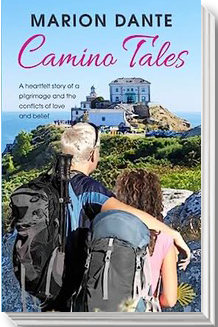
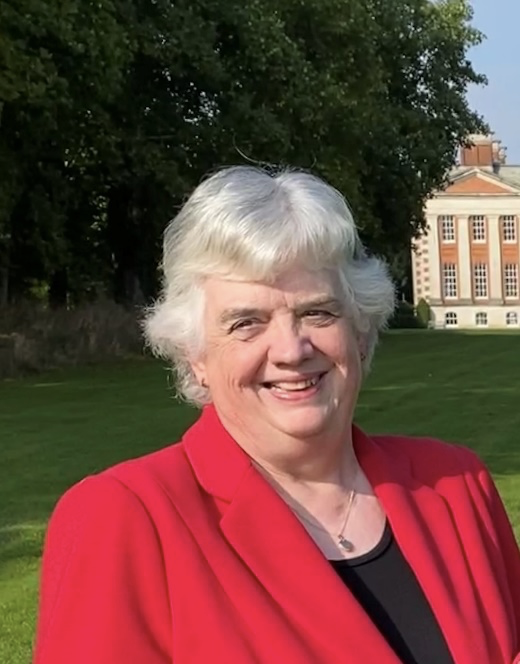
    by Marion Dante

    For many years I felt compelled to write. Perhaps it could have been because my surname is Dante! Of course not. If only I was  related to the great Dante Alighieri 1265–1321, considered to be the greatest Italian poet, best known for The Divine Comedy, an epic poem that is one of the world’s most important works of literature. Dream on….

    Most likely it was the shock of struggling to cope after leaving a religious order of nuns that I had joined aged fourteen and remained a member of for thirty-three years that necessitated that I put pen to paper. The launch of my autobiography ‘Dropping The Habit’ felt like a great release.

    Aware that this book had been edited and supported, I sought writing courses in order to improve my first ventures into publication. Fortunately I discovered Hampshire Writers’ Society. I was delighted when Barbara announced my autobiography.

    The Hampshire Writer’s Society became my refuge, Barbara Large, its founder, my patient heroine, generous tutor, guide and supporter. I entered many competitions set by the Hampshire Writers’ Society. I even managed to win ….was it third place? on one occasion. Encouraged by her I succeeded in publishing  two novels as a result of a correspondence course with her, often visiting her home.

    Without Barbara’s support I felt bereft. Memories of her saying her farewell days before she died took its toll. Eventually however, I have produced the third novel to form a trilogy. Again I turned to Hampshire Writer’s Society for an editor. Thankfully, Secretary Maggie Farran recommended an excellent editor. 

    Through the direction of Joanna Barnard and Christine Hammacott of the Art of Communication, the design of the book cover, formatting and a great deal of help, Camino Tales is now published.

    Visit Marion Dante’s author website to find out more about her books and read her blog. 

  • Mixing Magic with Nature – February competition results, adjudicated by Yarrow Townsend

    It was lovely to hear Yarrow Townsend, children’s author, speak about her journey to publication and how passion for nature and experience of New Forest inspired her new novel, Map of Leaves; this, in turn, perfectly linked to our February competition, adjudicated by Yarrow:

    Write the opening of a story with a mix of magic and nature. 300 words.

    And the winners are…

    First Place: A Cloak of Feathers by Catherine Griffin

    Second Place: The Cost by Ben Culleton

    Third Place: Raglan by Jane French

    Highly Commended: There Be Magic by Anthony Ridgway

    Highly Commended: A Kind of Magic by Natalie Morant


    First Place: A Cloak of Feathers by Catherine Griffin

    I was really captivated by this opening. The natural landscape is vividly painted, and within a few lines the author depicts a strong bond between Lin and the birds.

    Yarrow Townsend

    The thrush left Lin’s shoulder and swooped ahead to land among the gnarled branches of the Loa-tree. Charms swayed, all the straw dolls whispering prayers against the mossy bark. 

    Lin followed, her bare heels sinking deep into the leaf mould. In the shelter of the sacred grove, the air felt warmer and smelled like spring, urgent with green growth. 

    Most villagers feared the forest. Beyond the clearing, past the stone-marked boundary, the trees stretched on forever, home to bears and wolves and pale-eyed nixies. But Lin knew how far she could go, and here was safe.  

    Here were no sly glances, no muttered insults. She didn’t mind the crowding silent trees. They weren’t friendly or unfriendly, only interested in tree-things, in wind and water and sun, not girls or their errands. 

    Her thrush-friend flicked his tail: Are you coming? 

    Before she could answer, a family of sparrows exploded from the undergrowth. The rowdy little flock scuffled for space on her head and shoulders with gleeful chirps of Me! Push off, runt! I was here first! Me! 

    A sharp beak tugged her hair. ’Ow. Stop that.’ As she turned to bat them away, she saw someone on the far side of the clearing, watching her. 

    It was Rob, the orphan from Darrow, staring with his brown eyes wide and his mouth hanging open.  

    Lin flinched. Too late to hide, to run — he’d seen her. He’d seen her with the birds and now the whole village would know. All the old gossip would be back. They’d call her witch, and worse, much worse. 

    He raised his hand. ‘Lin—’ 

    But whatever he meant to say went unheard. She was already running. 


    Second Place: The Cost by Ben Culleton

    In this opening page, the author sets up an intriguing premise (that using magic can have an impact anywhere on the globe). The writing is confident and controlled and there were some subtle descriptions that made me hope Professor Cranston would take a leading role in this story.

    Yarrow Townsend

    A murmur reverberated around the auditorium as a solitary green shoot appeared out of the ceramic plant pot. It grew ten inches tall and bloomed into a fully grown blue freesia. Professor Cranston’s slender manicured fingers waved above the petals and a small grey cloud appeared above them. 

    “I shall give it some nourishment,” said the professor, her fingers wiggling. Droplets of water trickled delicately onto the flower, the audience members at the back able to see the drops running down the stem to soak into the soil courtesy of the large screen behind the professor. 

    Cranston smiled at her creation, soft eyes betraying a hint of sadness only noticeable to the first few rows of seats in the expansive auditorium. She waved her hand dismissively at it and it burst into a short explosion of flames before dissolving into ash, plant pot and all. 

    The crowd reacted exactly the way the speaker expected. Professor Hennessy Cranston had shown this demonstration to countless students over the years, and it never failed to make the desired impact. Conversations rippled around the room, its acoustics adding to the effect. Cranston raised a hand and the voices subsided. 

    “Today is day one of your learning here,” she said. “You might be wondering why I destroyed the flower. To create magic, causes implications elsewhere. To create a flower, a thousand year old tree might wither and die. To give it water here, it might create a drought on the other side of the world. There are five years and many lessons ahead of you, and if you remember one thing, allow this demonstration to sink in and remind you that every single magic spell comes at a cost. Remember that, and you might do well here.” She paused for effect. “Welcome to the Magic Academy.” 


    Third Place: Raglan by Jane French

    I’m captivated by stories featuring birds (there can never be too many!) and this one really had the essence of an old myth. I was drawn in by Blodwith’s character and wanted to see where the story would go.

    Yarrow Townsend

    “I’m going to tell you a story,” Blodwith said, settling a black wing over her chick and re-arranging her arms and legs. “It’s about the world before we had wings. In those days we lived on the ground, we had skin that burned in the sun and eyes that looked down, for fear of falling over. It was the time when the world drowned.”  

    The chick was too young to understand but Blodwith’s song would soothe her to sleep and sometimes it helped to speak aloud in a world inhabited only by the survivors. They were one of the larger flocks – too large for what the land offered – but there was safety in numbers.  

    “My grandmother told me this story – about how she escaped in the great exit flight.”  

    If she closed her eyes, Blodwith could see the old bird now – feathers plucked from her breast like she was preparing herself for roasting.  

    ‘Stress dears,’ she would say. ‘You never get over it.’ 

     Grandma Feathers was a survivor, right up until the night she was taken by the Great Marlin.  

    It was near light death now when the giant bird herself, Marlin, would spread her wings over the world and cover it with darkness. Those stragglers foolish enough to fly too far in search of food, now returned. The penalty was to be forced to the outer edges. You had to be in the centre of the flock to be safe. Those on the edge slept fitfully, scared that Marlin would wake and snatch a sacrifice.  

    Blodwith searched anxiously for Raglan. Raglan, who everyone made fun of, her brave red-feathered boy. He no longer required a mother, had passed over into the flock in the Spring, but Blodwith knew his place was as fragile as the fruit on a cherry tree. Raglan was different and it made him vulnerable.


    Highly Commended: There Be Magic by Anthony Ridgway

    I really enjoyed the narrator’s voice here and I loved the unexpected and surreal ending. This page could stand alone as a short story, but I’m intrigued about where the discovery of the eye could lead. 

    Yarrow Townsend

    I am not one for gardening as a general rule. 

    When I moved into my new house, a hundred year old cottage, with a large garden, the prospect of doing any gardening filled me with dread. 

    You see what normally happens is anything that I plant in my garden usually ends up dead.

    The garden was derelict. It looked as if no-one had cared for it for years. Tangled bushes, drooping fir trees, moss laden grass, brambles protruding everywhere. Sighing, I imagined the garden as a country cottage garden. 

    Foxgloves, aquilegia ,geraniums, pinks, roses, phlox- according to Gardeners World. Fat chance, I thought. I’ll have to get someone in. 

    That night, as I drifted off to sleep, I imagined a sun dappled garden bursting with colour, busy bees humming, birds singing. Wonderful.

    When I woke up in the morning, I couldn’t believe my eyes. My garden was a wash of colour with plants of all shapes and sizes as far as the eye could see. 

    But who could have put them there? One of my neighbours? Unlikely as I had barely passed the time of day with them.

    Exploring, I discovered that one or two areas were still wilderness. 

    I had an idea. Tonight, I’ll set up the time lapse on my camera. Photography being one of my hobbies. I’ll find out who is behind my garden makeover. 

    I couldn’t wait for nightfall and was very tempted to stay up and see for myself, It was not to be. My eyelids began to droop and before I knew it, morning sunshine streamed into my bedroom. 

    I leapt out of bed, hardly containing my excitement. I went straight to the camera pressed playback. 

    At first the footage showed the garden in darkness. I could just about make out shapes of foliage, Then I jumped back in alarm. 

    A huge globular eye filled the screen. It slowly blinked. Then the screen went blank.


    Highly Commended: A Kind of Magic by Natalie Morant

    Another entry where the protagonist caught my eye. I think many of us would like to be the heroine here – still cycling at a wild speed later in life. I think this character could have some spectacular adventures. 

    Yarrow Townsend

    The chill of dusk was getting into her bones now. Give it ten more minutes, then she would go for it anyway. Lift her feet onto the pedals and let the gentle slope carry her through the tunnel of trees. Hope that somewhere along the way, before you had to start slowing down, another free spirit would arrive. 

    Usually, it was a sparrowhawk, effortlessly keeping pace in the air above her, beside her, around her. Once it had been a buzzard, unusual in this narrow space. And the tawny owl – that had been special. In those days she had pedalled like mad but she didn’t know if she was up to that now, not with the arthritis and the varicose veins. 

    There – a shrill kee-ee from behind. She gave a little push with her feet. Her heart leapt in her chest as the very real possibility of a fall returned to jab at her mind. But if she was too slow, too wobbly, too full of doubt…she resisted the impulse to squeeze at the brakes. She found that she could still pedal hard, so that the wind tugged at her wispy hair and her clothes fluttered.  

    She sensed the sparrowhawk alongside and knew it could go much faster but was choosing not to. They flew together down the shady lane, leaves crunching beneath the wheels of her bike and the last of the day’s sunlight flashing through gaps in the branches. Her heart sang with the joy of it, she was grinning, couldn’t help herself. Even if the magic didn’t happen, this was a kind of magic in itself, wasn’t it? 

    Then a thrill as she realised it was going to work, it was happening, the air shimmered in front of them and together, she and the hawk plunged into that other place. The world she hadn’t visited for too many years. 

  • March 14th: Claire Gradidge

    March 14th: Claire Gradidge

    Join us at 7:30pm at the University of Winchester, Winton Room 5, when our main speaker with be local author Claire Gradidge, and our guest speaker is Sara Gangai. Results of the February competition, judged by Claire Gradidge, will be announced, along with the details for the March competition.

    Talks are free for members. Non-members are also welcome — tickets £10, students £2. No booking required.

    Blending Fact and Fiction – writing WWII crime fiction set in Hampshire

    Claire Gradidge was born and brought up in Romsey. After a career as, among other things, a nurse and a school librarian, she went to the University of Winchester, where she graduated in 2009 with a first class honours BA in Creative Writing.

    In January 2018, she was awarded a PhD in creative writing. The Unexpected Return of Josephine Fox, written as the creative element of her PhD study, went on to win the Richard and Judy Search for a Bestseller competition.

    The third book in the Josephine Fox series, A Conflict of Interests, was published in October, 2022.

    In her talk, Claire will discuss how memory and old maps, family stories and local history helped her create the Josephine Fox mystery series.

    An Associate Lecturer on the Creative Writing Programme at the University of Winchester, Claire also leads a local Adult Education class. She has had short fictions and poetry published in South, Orbis and Vortex. An active member of the creative writing community, she is a founder member of Chandlers Ford Writers and participates in local writing events, including as a judge for poetry and prose competitions.

    Find Claire on Twitter (@ClaireGradidge) or online at 

    www.chandlersfordwriters.wordpress.com/chandlers-ford-writers 

    Sara Gangai

    Sara Gangai was the Event Manager and then Director of the Winchester Writers’ Festival before starting Writers’ Weekend when the university decided to close the Writers’ Festival.

    In 2022, after ten years with the Writers’ Festival and Writers’ Weekend, she passed the torch to the team at I AM in Print so that she could focus on her passion: interviewing and capturing life histories on video.

    Her interest in oral histories began while she was studying for her MA in Regional and Local History and Archaeology at the University of Winchester. She knew that it was common to record people’s recollections for academic research, but felt that every one of us had an interesting and unique story to tell.

    She began SharedMemories.uk to give people the opportunity to tell their life stories so that they can be shared with family and friends and treasured for generations to come.

    She will be speaking about the value of recording your life story and the power of authentic voices and memories to inform your writing.

  • Alys Blakeway talks about Victorian writer, Charlotte Mary Yonge

    Alys Blakeway, Special Guest, Hampshire Writers’ Society 13th December 2022

    Report by Sarah Noon


    Charlotte Mary Yonge was a bestselling Victorian writer born in August 1823. She is recognised as having changed the name of Eastley, to Eastleigh – the spelling that we use today. Our speaker this evening, Alys Blakeway, chairs the Charlotte Yonge Fellowship and is talking to us about about the writer and her books.


    2023 is the bicentenary of Charlotte Yonge’s birth and Alys tells us that tonight is special for her as it is the first event linked to Charlotte Yonge’s anniversary (Alys refers to Charlotte Yonge as “C.M.Y”). Other events taking place in 2023 will be based at Otterbourne Church, Hampshire Records Office, the Winchester City Museum and Winchester Cathedral. Alys also tells us that Palgrave Macmillan are publishing a book Charlotte Mary Yonge: Writing in the Victorian Age. She is hoping the University library will purchase it. There is also an event Leeds Trinity University in June as well as an event here at the University of Winchester.
    Alys then goes on to talk about the writer herself. A profoundly Christian woman, CMY was born and lived all her life in Otterbourne. She never married (“…she didn’t need to…”), living off inherited wealth. Alys explains that her writing had a universal appeal “… from servants to soldiers; from priests to princesses.” Her bestseller, The Heir of Redclyffe, earned her £1000 – a considerable sum at the time. Allys tells us how Yonge gave this money away to missionaries on the Pacific Islands. Her books “… fell out of favour…” in the 20th Century due to changes in social attitudes – some perceived the tone of her writing to be somewhat “preachy.” This, says Alys, overshadowed her “…vivid characterisation and lively dialogue.”


    CMY began writing in 1838 and continued writing until her death in 1901 – writing both fiction and non-fiction, historical and contemporary, for adults and children. We are reminded that this coincides almost exactly with Queen Victoria’s reign and reflects the huge changes that occurred during that period. Alys explains that due to the high quality of the writing, Yonge’s books remain “…good reads…”
    Alys explains that there were two main influences on CMY’s work: her father and John Keeble. Her father was deeply religious and spent many years in the army. Keeble was Yonge’s parish priest as well as a family friend. Alys is keen to point out that these were “…influencers, not dictators.” They would read her work, offer criticism and encourage re-writing. However, her writing continued for many years after the two men had passed away.
    Allys tells us that Charlotte was a “…solitary child…” and therefore began storytelling at an early age – to her imaginary family of ten boys and eleven girls! These imaginary brothers and sisters were the early formations of characters that ended up in CMY’s books. She did however, have many cousins. Alys also describes CMY as a “…a keen observer…” basing many elements of her writing on real life. She goes on to say how she would often write down conversations she had with others for reference (a transcript of one survives to this day) “… hence the unstilted dialogue.”


    CMY did not need to write for money, but “… wrote because she could not help it.” However, in 1876 her brother Julian was declared bankrupt and much of her earnings went to support his family. Alys tells us that her later works are “… rather like potboilers” causing her to ponder whether this was as a result of feeling pressure of writing more in order to provide for her brother’s family.


    CMY’s good characters have to struggle to overcome their faults and gain sympathy from the reader. She wrote about struggles that were close to her – for example the lack of adequate drainage in Winchester – close to where she lived. The town had no proper sewerage because people refused to pay for it. This issue forms the plot in three of her novels. She also wrote about Women’s Rights. Alys explains that as the Victorian attitudes towards education changed over the years, CMY’s did too.
    Having explained a little of CMY’s life and influences, Alys ends her talk exploring CMY’s techniques as a writer. She says that CMY “…introduces human drama and adventure into many of her books for adults and children alike.” Like many other Victorian authors, her stories were serialised. Therefore, she had to create suspense in order to ensure that readers would buy the next instalment. She used adventure to do this, but then also used that adventure to develop the characters. Alys demonstrates this by reading us a passage from one her books. CMY used adventure to develop plot and character in her family sagas too (Alys gives us the example of The Daisy Chain) and gives CMY credit for showing “…clichéd characters and plots in a new light.” Several examples of established characters are given (The governess, the stepmother, the hero), all of whom have been slightly altered by CMY to provide a new perspective.
    Alys ends her fascinating talk with the summary “A born writer, a surprisingly unconventional novelist, a good read and a window on the Victorian age.”

  • David Keighley

    Special Guest, Hampshire Writers’ Society 8th November 2022

    Report by Sarah Noon


    David published a selection of poems in 2020 entitled Poems, Piety and Psyche (David’s three main interests in life) described as “Progressive poems for rebellious Christians.” He is a performance poet, was a priest for 40 years, and a qualified psychotherapist. He has also been a science teacher and a remedial teacher. David tells us that he has written 4160 sermons – the equivalent of eight War & Peace’s or six Bibles!


    David begins his talk by telling us that the room is a “safe space” and that some of his views may be challenging (they’re meant to be), but that he hopes his views don’t upset people too much. He points out that we all have our own views. His intention with his work is to “…demythologise Christian doctrines…” in an attempt to prevent young people leaving the Church – to challenge our perceptions of the Bible, rather than to give up on religion. He feels that many young people today don’t believe in the miracles of the Bible, and therefore ditch religion, rather than explore its deeper meaning, adding that in today’s world particularly, “we need love, compassion, forgiveness and tolerance.”
    His book was originally published in America, by an academic publishing house in Oregon. He claims that British publishers were not keen on his brand of poetry. They wanted something more “meek and mild.” He explains that the poems are organised into clusters – creation and Bible poems, God’s hell and incarnation, Christmas and Nativity stories, Jesus and the Crucifixion, Church and the ministry, culture and the cosmos and then an epic poem at the end which summarises everything. Not his choice, David adds, but the publisher’s choice.
    His objectives he tells us are “…to revitalise the church and reshape its future for the current declining congregation.” He goes on to tell us that the amount of clergy is declining, fewer young people are entering the church and money is also declining. With all of this in mind, David aims to get people to explore the Church’s meaning in today’s world, rather than to simply abandon it. In 1963, David informs us, there were 20,000 clergy in the Church of England. Today there are just 7,000.

    David claims that because young people are very scientifically literate today, they therefore do not believe in the idea of miracles. David hopes that his poetry will urge people to consider that there is more to Christianity than that. He feels that Christianity is often taught as history and as something that actually happened, whereas the New Testament is “… mythology and stories…” and is to do with …”the meaning behind what it says.”

    David goes on to read us the first poem in his book entitled Horses for Courses. An angry tone runs through his poems – he says he’s angry about what is happening to his Church. There are many things going on that make people angry – war, consumerism, child abuse etc., and with these things happening, where does that leave the place of the Church?
    David explains to us where he believes the challenge to Christian doctrine started. He believes that it began with the school nativity play. The problem is, he says, that children believe the literal story, rather than exploring a deeper meaning. We should, he says, be asking “What does it mean?” rather than “Did it happen?” He then proceeds to play a reading by Hugh Bonneville of his poem “Midnight Mass.” exploring how the Christian message is somewhat lost in the New Year and the Christmas spirit quickly vanishes.
    David asks, has the Church mired the true message – love tolerance, forgiveness etc? He feels that the Church has lost contact with this and tells us “… he doesn’t have many friends amongst bishops.”
    David has been asked many times, why write a poetry book rather than a theological study? He explains that “…a single, short poem can sum up an entire theology … you can take liberties with poems.” He reads us a quote from an endorsement to his book, describing poetry as “…words so twisted and so pressed that they express the matter more densely and more subtly than if they were left to their own devices.”
    The creative process involved David working on his books for a year – one poem was previously written but the rest were all written for the book. The writing of his book, he says, became an obsession. The book has seven chapters, 134 poems. He constantly revised his poems, stripping away until “… the meaning was left.”
    David finishes with one final poem, Sea of Faith which he describes as his “effort to correct some dodgy doctrine.”
    A very thought-provoking talk and a clear demonstration of the power of poetry.

  • Clare Whitfield – Standing Out from the Slush Pile

    A report of Clare Whitfield’s talk to the Hampshire Writers’ Society 8th November 2022

    by Sarah Noon


    Clare is a writer who describes herself as “dull and ordinary.” She talks to us this evening about “Standing out from the slush pile” when submitting work. As well as having two books published, Clare has worked in publishing herself. She has also just signed another two-book deal – the first one expected in September 2024.


    Clare did her Master’s degree in Creative and Critical Writing at the University of Winchester and tells us she is happy to be back (“…it’s handy as at least I know where to park my car.”). Her first book, People of Abandoned Character, was out in October 2020, in the middle of the pandemic. Not good timing she says, but “People actually did lose their lives, so let’s get that in check”. The book is about what might happen if you found out you were married to Jack the Ripper. The Gone and the Forgotten came out in June and is set in Shetland in the 1990’s, about a girl from a family that is full of secrets.


    Clare is 44 years old, married and lives in Bursledon, but is originally from south London. She claims that there is “… nothing remotely interesting about my background or history.” She adds that she is “…from council house stock and working class through and through.” She was the first member of the family to go on to further and higher education. Clare shares that she also has Autistic Spectrum Disorder. She tells us this because, she says, these are all things that she has leaned on to get herself through slush piles.


    She also worked as an editorial assistant for a publishing company. She says this wasn’t as glamorous as it sounds because it was mainly newswriting. However, this experience gave her valuable skills. “Writing news,” she says, ”…is very specific and technical.” Clare also tried freelance writing, but it didn’t work for her as she needed a full-time job. She now works full time as well as being a writer.


    Clare goes on to tell us that whatever route a writer may go down, they will have to manage their own writing career. “No one will do it for you,” she says. Therefore, we should draw upon all our skills and weaknesses in order to succeed. This also applies when it comes to meeting people within the publishing world. The people within it, she says, are “lovely” but the world of publishing can be completely alien. She says that using her skills and experiences to navigate her way through has enabled her to manage meeting people from within the industry.


    She informs us that “self-awareness is the key.” She urges us to question what it is we want and what motivates us. What skills do we have that we can draw upon? She makes no secret of the fact that in order to get a book published, a writer needs to devote many hours a week working to achieve this. She also reminds us to consider that we “…are the product too.” Are we sellable?
    When Clare sent her synopsis of her second book to her agent and her publisher, she was devastated to discover that they did not like it and were not interested. She describes herself at this point as being in “…a pit of despair.”
    What made her refocus was watching a TV series called “The Offer” about the making of the film The Godfather – in particular the blocks that producer Albert Roddy came up against. Clare says that “…the battles to get that film made appear endless.” The series shows Roddy working incredibly hard to re-pitch, bounce back and not give up. The Godfather was not an easy film to get made and Roddy continued until it was competed. Clare describes this as “…a massive message from the universe” to persevere.


    So, what IS a slush pile? Claire tells us that after clarifying with her agent, it is absolutely a real thing – a pile of unsolicited manuscripts that have been sent to a publishing company or agent. She reminds us that to avoid a manuscript being put into a slush pile, there is no big secret “…it’s not magic and fairy dust” she reiterates, “…it’s just hard work.” However, she points out that there are many hoops to jump through, and we have to be able to deal with inevitable rejection effectively. This is where our past experiences can help us get through.


    Clare’s experience as a dancer enabled her to cope with criticism and rejection. She reminds us that everyone will have an opinion about what we do “even friends and family.” But, she says, opinions are often unsolicited. She goes on to show us a list of negative comments that people had said to her before and after her books were published (she gets her revenge by writing them into her books!). Clare points out that this is where our strong sense of self comes into play. Without it, we can be led in all sorts of opposing directions.
    She urges us to set our goals and make logical steps (she is keen to clarify that it is a goal, not a dream). For Clare to do this, she treated it like a project. She shows us a step-by-step spreadsheet that enabled her to achieve her goals.
    A key element of this is getting an agent. Clare reminds us what an agent does (negotiate book deals, sell your book, create publicity, advise on publishers etc). The first and crucial point when sending a manuscript to an agent is to follow the submission rules. “…this is just good manners,” Clare points out. She warns us to follow them to the letter. Clare goes onto advise us on how we should structure our cover letter including an introduction and a synopsis. She points out that having consulted the Writers and Artists Yearbook to establish the best agents to contact, we should tailor our letters to them rather than a “one-size-fits-all” cover letter. This also includes establishing the name of the person to whom you are sending the letter. There should be no “Dear Sir or Madam.” As Clare points out, why should they be bothered if you can’t? She suggests that in our author bios, we should be talking about people in the industry that we may have a connection with (“Agents are people people”). She also reminds us to make sure we include things such as competition awards and magazine articles – this is an industry that thrives upon networking.


    Clare continues by talking about the pitch. She explains that the objective for the pitch is to enable the agent to understand what the book is about in order that they can find the right publisher to sell it. “The pitch is to enable an agent to understand at speed what section of the bookshop you belong in.” She advises us to “…get to the pitch quickly.” She asks us to think about how we might explain a movie to our parents.
    The pitch will include a hook which is the hinge-point to your entire story. It’s the lure that hooks in the reader. Clare says, “the shorter the better” and make clear comparisons to other books and writers. She suggests that we can practise writing hooks by writing pitches for movies or fairy tales. She reminds us that this is not a synopsis (the synopsis should not be longer than one single page; the pitch should be one line and punchy).
    Clare points out that if a synopsis is longer than a page we should consider that we may have too many threads. She also reminds us that a synopsis is not a place for including flowery prose. It is quite simply to relay the story. It should include time, place, protagonist, etc, and any subplots that are important to the ending. There is no need to include any other subplots. And make sure you make the ending clear (some writers are reluctant to give away their ending)! The pitch and the synopsis are not to be confused with the blurb, Clare says.


    Clare is giving us all of this information, not just from her own experiences but by talking to other friends and colleagues in the business. She shared quotes from them with regards to avoiding slush piles and they totally concur with Clare’s advice.
    At the end of her fascinating talk, Clare shows us her first letter to an agent (whilst cringing), claiming “…it’s not perfect, but it worked.”
    Clare’s talk demonstrated what hard work and dedication can achieve, proving that she is far from “dull and ordinary.”