Month: September 2023

  • Claire Gradidge – Speaker in March 2023

    Winner of the Richard and Judy Search for a Bestseller Prize in 2018

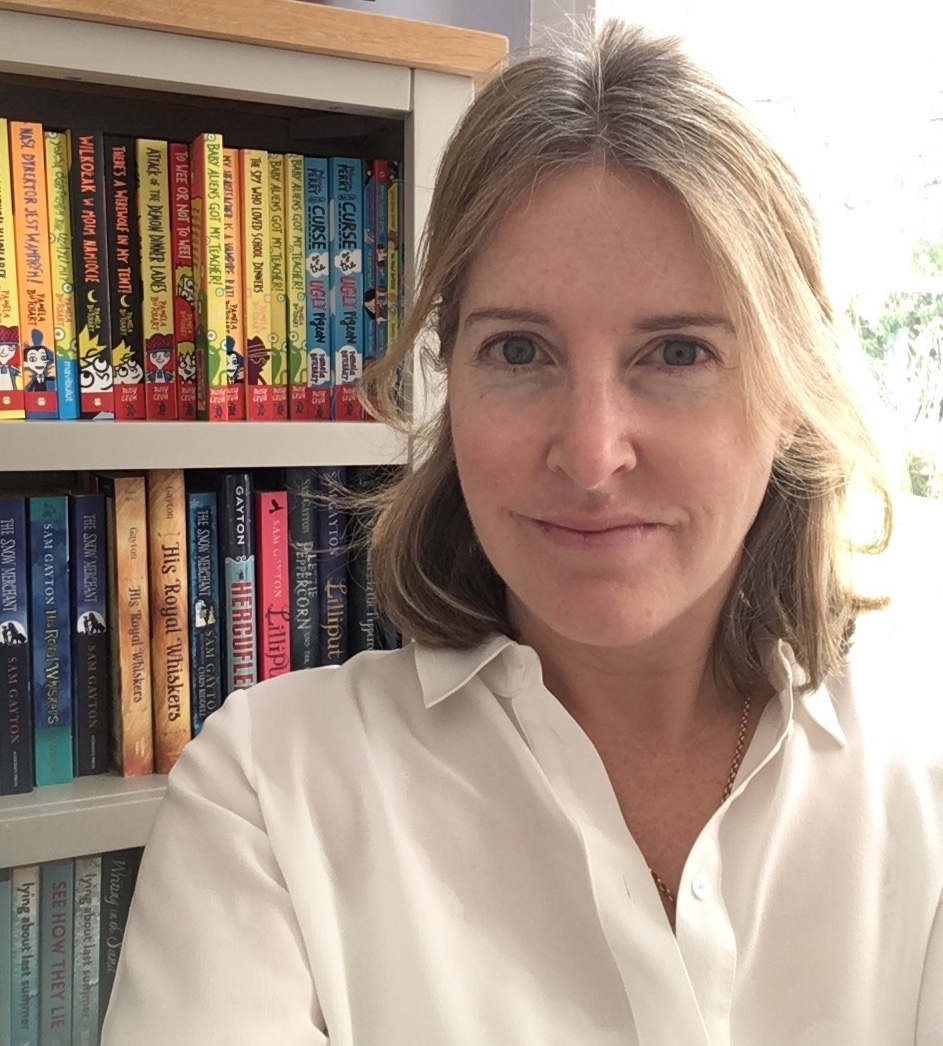
    Born and brought up in Romsey, Claire is a successful historical fiction writer.  She has had three novels published so far – a crime series set in Romsey during WW2. This follows her former career as a nurse. She is a founder member of Chandlers Ford Writers and studied at the University of Winchester to gain her degree (“The rest of my family had degrees and I wanted to catch up with them.”). She then continued at the university gaining a PhD. For this, she focused on creating contemporary fiction that was set in the past. She is here today to talk to us about what happens in the writing process when fact and fiction meet. This, she tells us, occurs with all historical fiction.  Claire has researched her books using old maps and local history, as well as real-life stories.

    Claire first explains what historical fiction is. She says “…it’s fiction that is set thirty to fifty years before the current date.” Adding that with this definition, she too is “pretty historical.” Claire tells us that whilst she was not born until after the Second World War (“…despite what I might look like.”), she grew up at a time where her parents and others had many memories of that time, and so she knew many first-hand stories which she uses in her writing. Historical fiction, Claire tells, us can be a mix of real people in fiction events, or fictional people in real events or a combination.  She explains that her stories tend to be fictional people and fictional happenings set against a backdrop of real places and events. Each of her stories is set against what Claire considers crucial points in the war.

    Claire has always been interested in history – both fiction and non-fiction, especially local and English history.  However, the first book she wrote was set in 17th Century America. She admits that she “…knew absolutely nothing,” about 17th Century America and when she wrote this – the mid-1980s, research was far more complicated than it is today with the advent of online archives and internet research. “These days,” she says, “I would never do a story set in a place I didn’t know,” even though researching would be far easier.

    Claire says that researching is now “…one of my great pleasures.” She loves to study an era and find “…the little tiny details.” One of the scenes in her book for example, involves a bike ride from Oliver’s Battery to Brashfield, and Claire enjoys finding out details such as how long that journey would take, or how much a bus fare would have been.

    One advantage of Claire  writing crime stories that are set in the past is that she does not have to write about technology (“I am pretty poor with technology,” she admits). Therefore, by setting her work when there was no CCTV or mobile phones etc., Claire has eliminated the need to address this.

    Claire was an avid reader of crime fiction growing up, telling us that by the age of ten, she had read all the books in the children’s library and so moved on to the ones in the adult section. She adds that Sherlock Holmes was her “…first brush with crime fiction.”  She loves whom she refers to as “Golden Age crime fighters” such as Dorothy Sayers. Crime fiction has a very clear structure, and this is what Claire likes about it.

    When Claire first sent her novel set in 17th Century America to publishers, one of the comments she received was that “people don’t read historical fiction anymore.” However, she says, thanks to people like Hilary Mantel it has seen an increase in popularity. Claire explains that when she was deciding what type of stories to write for her PhD, she knew that “…historical crime fiction is a seller.”

    Claire had already spent time researching her family history for her father several years previously. She later researched her husband’s family history, inspired by her new married surname of Gradidge (“… sort of unusual unless you live in Hampshire.”).

    This lead to further research into Romsey – the place where she grew up. She tells us about the family smallholding and her hardworking parents. Claire says, “Nobody ever told me that we were poor until I look back at it.” She goes on explain her growing nostalgia for Romsey and its town, after the smallholding was sold and they moved to Chandlers Ford. Claire shows us some images of 1930s Romsey compared to photographs from similar angles taken more recently, to demonstrate how little the centre of Romsey has changed.

    Claire’s first published book was The Unexpected Return of Josephine Fox – the result of her PhD. She entered it into the Richard and Judy Search for a Bestseller prize in 2018. She explains the process of entering the competition and being shortlisted, and then subsequently winning – telling us that she still cannot believe that it happened – despite its publication in August 2019!

    Claire goes on to talk to us about how real stories can blend with fiction. She gives us the example of Bram – one of her main characters, who due to his age and the time the story is set, must have fought in the First World War or had a reason not to have done so. She shows us a photograph of a real mask used for soldiers from WW1 who had facial injuries. These were often made with copper plate and then had features painted on by artists. Here, Claire demonstrates the importance of research.  The most common injuries from soldiers during the war were facial injuries, and cosmetic surgery was in its infancy. “There is a wonderful archive if you’ve got a strong stomach, of pastel drawings of men that had been … injured in this way in the First World War.” She goes on to tell us that many of these men never left their houses or went outside again, such was the severity of their disfigurements. With this in mind, and Claire not being aware of many other literary characters in her genre with facial disfigurements, she gave Bram a mask worn due to a facial injury he received during the war. So, whilst Bram is fictional, the story behind him is based on real life.  Just as the hospital in which Bram stays in is also real, and the subject of much research by Claire.

    Claire tells us of other fascinating stories she discovered whilst researching her books and explains how these influenced or shaped her characters and stories – the point at which the real stories blend with fiction. Her second book for example, is set against the backdrop of the Battle of El Alamein and Churchill’s End of the beginning speech. The story Claire has written is fictional, but the setting needs to be historically accurate and the impact upon the characters needs to be considered.

    Claire is currently working on the fourth book of her series. She says, “I’m out of contract now, but I am writing Book Four because I said I was going to write four and I’m stubborn.” This one is set towards the end of the war, in September 1945 shortly after Japan had surrendered and “… things got more difficult in Britain than they had been all through the war.”  Her story, she tells us, has characters coming home from the war and not finding what they expected upon their return.

    It has been fascinating to hear Claire remind us of the importance of research for any book – but to understand where fact and fiction meet – how true stories and local histories have influenced her writing. We wish her success with her fourth book.

    Report by Sarah Noon

  • Sara Gangai – Speaker, March 2023

    Sara Gangai was formerly the director of Winchester Writers’ Festival for several years, followed by The Writers’ Weekend. She has a Master’s Degree in local history and archaeology from the University of Winchester. This has led her to an interest in the link between history and storytelling. She is with us this evening to tell us about her latest project – Shared Memories.

    Sara begins by telling us about her work organising the Winchester Writers’ Festival, and how when the university stopped it after forty years, she started The Writers’ Weekend – a virtual event due to Covid. She explains that although this was not how The Writers’ Weekend was intended to be, the online nature of the event meant that people could join from all over the world (one of the keynote speakers gave their speech from Arizona). Sara tells us “…it opened up a lot of possibilities.”

    However, Sara informs us that her true passion is “storytelling in a different form,” and after working on the writing festivals for many years, she felt it was time to pursue this. There were people in the wings ready to take on the running of The Writers’ Weekend (now called the I Am Writing festival) and this gave Sara the time she needed.

    Sara started Shared Memories “…to capture ordinary people’s life stories.”  She explains that this fascinates her.  She goes on to tell us that quite often when she sits down with people, they tell her that they have nothing to say, but that once they begin talking you realise that that they have lived a very interesting life.

    Sarah clearly feels that the service she offers is extremely important and she demonstrates this by telling us the story of her dad, Akira, who was born in Japan in 1920. He led a fascinating life – and at his funeral, she was told many stories about him, that she had not heard before. There is sadness in her voice when she continues, sharing that in her grief she struggled to remember many of these stories and wished there was someone who could have recorded these for her family to listen to (“…it would have been absolutely priceless to me and my siblings.”).

    Sara spent a great deal of time listening to tapes in the record office when researching local history for her Master’s degree.  Many of the tapes, she says, were recorded in the 1970s and were of people in Winchester.  They demonstrated how much life had changed over the years.

    What consolidated Sara’s love of people telling their stories, was an 80-year-old man she interviewed as part of her thesis research. She explains that as he talked about his life, he realised that he had never really shared his stories with anyone, “…not even his own children.”  He found that by being able to talk to Sara without interruption was “cathartic” and it moved him to tears. Sara says, “I was hooked by that point.”

    Shared Memories records people’s life stories on audio and videotape. Once Sara has the material, she adds family photos to create a video that can be shared “…with family and future generations.” At this point, she plays us a snippet of one of her videos – a 90-year-old woman talking to her daughter about her own childhood in her mother’s shop.  We hear the lady reminiscing, whilst photos of the shop – past and present, are shown. The effect is very powerful. Sara shares with us that the lady passed away shortly after the making of the video, and her daughter was comforted by the fact that she had this film.

    Sara has plans to develop her new business further. One element she is creating is a digital space where families can share their genealogical findings (she describes it as a family version of the TV series Who Do You Think You Are?). Another called Grandma’s Recipes consists of videotapes of people sharing their secrets of family dishes that have been passed down generations.

    Sara is currently editing the life story of a lady who has cancer. She has two children in their twenties and she wants to ensure that she was able to talk about her life without interruption. She also wanted to talk about her children and “…what her hopes and dreams are for them.” Sara describes working with her “a real honour.”

    Sara’s generation, she says, are the last generation that lived with very little technology (“I was 27 when I got my first mobile phone.”). She is clearly passionate about ensuring that upcoming generations know how the people before them lived their lives – studying, playing, working. She reminds us “some people grew up with no indoor toilet or central heating.”

    How can oral histories inform our writing? This is what Sara asks us to consider. She explains how when listening to voices (she give The Archers as an example) the accents an inflections can define a story (“It’s not just what they say, but how they say it as well.”). As writers, our characters can be developed by listening to people telling their stories, and focusing on their voices. There are many ways to access personal histories – Sara puts some web addresses on the screen.

    Sara ends her talk by asking us to “…consider adding oral histories to your toolkit as you develop your writing and your voice.”

    If you want to find out more, visit Sara’s website: sharedmemories.uk

    Report by Sarah Noon

  • Hooky Crime Scene – September competition results, adjudicated by Heath Gunn

    What a ‘thrilling’ opening evening to the new season our September 2023 meeting turned out to be with Murder Mystery writers Hannah Jameson and Heath Gunn speaking about their books and experience and sharing readings, rounded off by our crime writing competition, kindly adjudicated by Heath.

    Hook your readers in 300 words with the opening crime scene of your novel.

    And on the night, Heath’s winners were:

    First Place: Brothers in Arms by Dave Sinclair

    Second Place: Hard Bargain by Damon L. Wakes

    Third Place: Bystanders by Lesley Bungay

    Highly Commended: Rough Justice by Guy Caplin

    Highly Commended: Jeannie McQueen and the Case of the Barking Dog by Lynn Clement


    First Place: Brothers in Arms by Dave Sinclair

    This piece set the scene so well, drew me in and built to a great twist in the final line that made me want to know more.

    Heath Gunn

    Chapter One – Brighton, August 1967

    I had expected the hospital mortuary to be a grim place, perhaps in some run-down Victorian part of the hospital, cold, and full of unpleasant smells that were only partly hidden behind the ever-present disinfectant. Instead, the mortuary was in the basement of a modern block, a testament to the optimism of 1960s brick and concrete, well-lit, with warm cream decor and a spotlessly shining wall of stainless steel cabinets inset into one long wall. Four stainless tables occupied the centre of the room, each plumbed into a drainage channel in the floor. There was a certain ripeness to the air that the air conditioning could not quite overcome.

    True to his word, D.I. Morgan was already there. His firm handshake belied his flabby, almost cherubic appearance. It occurred to me that the pink flush to his complexion was probably due to the regular worship of alcohol in his local pubs rather than any godlier activities on a Sunday.

    “Thank you for coming, Major Granta,” he said.  “These circumstances are never easy.”

    “No, they never are,” I replied. I thought of all the people I had seen die in the Middle East – friends, terrorists and innocents – such things were never easy to see or be part of. Now, in this English Summer of Love, I would have to deal with one more.

    “Harry Granta, please,” said Morgan to the mortuary assistant, who pulled one of the stainless refrigeration cabinets out. The assistant folded back the top of the sheet revealing the face of a man, about 40, with a thin face and sallow skin. A fracture to the left side of his face, and a broken eye socket were clear but messy evidence of the impact from the clifftop fall that had killed him. It was the face of a man I had never seen before.

    “Is this your brother?” asked Morgan.

    “Yes,” I said, “indeed it is”.


    Second Place: Hard Bargain by Damon L. Wakes

    I really enjoyed the imagery this piece created, with the mix of physical setting and music – K-pop ringtone – I want to know what the Officer decided to do.

    Heath Gunn

    As far as Officer Harris could tell, it was some kind of deal gone wrong. There was someone in a suit at the table by the far wall; she assumed someone important. She might have recognised his face if it hadn’t been splattered across the art print behind him. A phone in his limp hand began to ring—an incongruously upbeat K-pop chorus.

    She turned her attention to the rest of the lounge. Face-down near the door was another man in a yellow tracksuit, still garishly bright despite the bloodstains blooming across his back. In one hand he clutched a semi-automatic pistol, the slide locked back—empty. In his other hand, there was a leather briefcase. Stooping for a closer look, she saw it had a combination lock.

    The phone stopped ringing for a moment, then immediately started up again—the same K-pop song.
    There were perhaps ten or twelve other bodies. It was hard to tell exactly how many as the ones by the floor-to-ceiling window—its glass now strewn across the floor—were in varying states of intactness. She had never seen a grenade go off, but her best guess was that someone on the losing side of the gunfight had brought one out to even the odds, and had evened them rather more thoroughly than intended.
    The phone stopped and started once again.

    Confident the room was clear, she stepped over it, hoping to catch the caller’s name. Instead, what grabbed her attention was a chat box on the shattered laptop screen. The same message, over and over:
    COP PICK UP PHONE
    So she did.
    “Grab the briefcase and climb out the balcony.” Not even a hello.
    “Why? What’s inside?”
    “Leverage.”
    Out front, a car skidded to a halt on the gravel drive.
    “But only if you can get it out of there.”


    Third Place: Bystanders by Lesley Bungay

    So much crammed into 300 words with this one. It uses the senses to build on the descriptions and then the last line created an intriguing twist.

    Heath Gunn

    We are the onlookers. An amorphous crowd gathered behind the blue and white tape, placed to keep the inquisitive at a discreet distance. Our necks crane between uniformed sentries, while hands rise with mobile phone camera’s scanning the scene for a good angle, an image to share on Instagram, fodder for the morbidly curious. We covet the social media scoop, to feed our need for the “likes”, the heart emojis, the kudos.

    Across the road, the experts work under our scrutiny, shrouded in white suits, their faces impenetrable behind masks. Emotionless eyes focus only on the job to be done, gathering the facts. Their cameras flash as numbered tags are placed beside anything of interest: a size ten footprint in the unmown grass; a snag of red fibre on an overgrown rose bush; a strand of blonde hair trapped in a spider’s web. Nothing is dismissed. Everything is documented. All evidence is bagged and labelled for futile analysis in their sterile lab.

    We shuffle forward in synchrony as the body bag emerges, trolley wheels jostling over the rough path. The passenger is slid into the back of the unmarked van, like a carcass onto the butcher’s block. The vehicle moves away at a respectful pace, some heads bow, a few cameras lower. Oh the desire to observe the pathologist’s fruitless scrutiny.

    The figures continue to drift ghost-like in and out of the house where he lived. If living is what you could call the squalor. The stench of rotting food, sweat and urine, mingled with the alcohol. A sorry end, the papers will say, another victim of a society grown weary from austerity and disease.
    The coroner’s verdict will be suicide or misadventure as it always is. They will find nothing suspicious. I made sure of that.


    Highly Commended: Rough Justice by Guy Caplin

    A great descriptive piece that had me in the scene. It could maybe have stopped without the need for last sentence and still hooked me in.

    Heath Gunn

    Shaking fingers prised open the window. Easing his body over the sill, the black-clad figure slid silently into the house. Breaking in must be nerve-racking for a criminal: for Truman, who had never even incurred a parking ticket, illegally entering the property was tantamount to torture. The stress pushed his heart-rate into overdrive. The pounding in his chest seemed so loud that he feared someone might hear.

    ‘Get a grip,’ he told himself. ‘Breathe deeply.’

    He switched on the penlight to guide him.

    The young man knew his actions were irrational, but seeing the gang boss, Nicholas Stamper, swagger from the court with that contemptuous smirk, which said, I can get away with murder, enraged him. The case had collapsed when the two key witnesses failed to testify: they never found the old man; however, the police fished the young woman’s mutilated body out of the Thames. The witness’s sickening fate convinced the young man: if the law was powereless, he needed to dispense justice with his own hands, and the punishment should fit the crime.

    He listened outside the master bedroom. Hearing nothing, he turned the handle. The door opened noiselessly to his touch. Drawing his weapon, he stepped inside. His foot encountered something sticky. Truman hesitated.

    The smell. That overpowering smell.

    The hairs on the back of his neck stood on end.

    His torch illuminated the pool of blood into which he had stepped. The beam followed the crimson stain to the bed. The unseeing eyes of the late Nicholas Stamper stared back at him. A dagger protruded from his throat. Justice had been done, but by whom?

    At that moment, the light came on. ‘And what have you got to say for yourself, Detective Sergeant Truman?’ said the voice of his superior officer.


    Highly Commended: Jeannie McQueen and the Case of the Barking Dog by Lynn Clement

    Poor Claire, what happened to her? The use of the dog to set the scene was great. How did Jeanine feel seeing the body of her neighbour? What did it do to her gut, her senses?

    Heath Gunn

    Prevaricating again. My late mother’s voice digs deep into my psyche.
    It’s been two months since I retired, and I have done none of the things I’d planned. I was going to completely fill my days, after raising my children and finally divorcing, ‘knob-head.’
    ‘Museums, art galleries, maybe Open-University,’ I’d said when people asked… but what will you do?
    Next door’s dog is yapping loudly again. That’s annoying, as there I was, about to be productive and sit outside to read my book on Zen but I won’t be able to if that dog keeps on. I’ll give Claire, my neighbour, a knock and see if she can keep him quiet. He’s not normally this bad.
    Claire’s door is open, which is unusual. I knock but walk in after she doesn’t answer.
    ‘Claire! Hello, Claire!’
    No reply. Maybe she’s outside with Toby.
    ‘Claire, are you in the garden? It’s me, Jeannie.’

    I see the back door is open so make my way towards it, intending to be polite but firm with Claire about Toby’s incessant barking. But I don’t get as far as the back door.
    Claire is in a heap on the kitchen floor. She’s clutching what looks like a flan dish and Toby is licking off the remnants of whipped cream and… blood.
    ‘Claire?’
    Toby looks at me with big brown eyes that say, ‘don’t think you’re having any of my freebies.’ I manage to shoo him away. He putters off to the garden and begins barking again.
    I touch Claire on the neck. Nothing.
    Well, do something, – mother again.
    A mirror. That’s what they do in films, they get a mirror to see if it mists-up.
    Claire’s handbag is on the kitchen table. I reach in and fish around, not taking my eyes off Claire in case she moves. Finding a small round shape, I pull out her compact and hold it towards her mouth and nose… Nothing!
    Oh my God, Claire is dead.

  • Yarrow Townsend

    Yarrow Townsend was a special guest speaker at the Hampshire Writers’ Society in February 2023.

    Yarrow is a Hampshire writer who has an affinity with the New Forest.  She lives on a narrowboat and is inspired by the natural world around her.  She writes for children and young adults, and is best known for her book The Map of Leaves, published by Chicken House. The book has been a Sunday Times children’s book of the week and shortlisted for the Branford Boase Award 2023.

    She reminds us that Henrietta Branford was also a local writer (she lived in Woolston for a while). Just like Henrietta, Yarrow knows the area well – she went to school in Romsey and lived in the New Forest.

    The first thing Yarrow talks about is her route into publication (“the timeframe can be so variable…”). She estimates that for her, the process was easily ten years from the start of her career until the publication of The Map of Leaves. This incorporated, she explains, the dreaming up of ideas, the transition to considering herself a serious writer and finally “…having the book in my hand.”

    Yarrow is eager to share with us where her inspiration came from. She explains that it comes from growing up “…in such a tactile place.” She describes how she was “immersed” in nature and gardens as a child. With a broad smile on her face, Yarrow describes some of the stories she and her family retold whilst exploring the natural world.  She shows us a photo of her, her sibling and her father singing songs from Winnie the Pooh whilst out and about. This, she says, provided her with a connection between real life and fables (She refers to these as her “raw materials”).

    She shows us a picture from a Shirley Hughes book and explains that she loves how the childhood experience is portrayed in her stories. When she is asked “Why children’s books?”, she explains that it is the exploration of the world through children’s eyes that Yarrow attempts to recapture. She touches upon The Hobbit, which describes real forests and nature, yet combines it with fiction to “…create something fantastical.”

     With Yarrow’s love of plants, she poses the question “Why didn’t I become a botanist … or go down the scientific road?”  She explains that it was because of “…all the mythology and stories that surround those plants.” She tells us that she wanted to learn how these stories were created. As a result, Yarrow studied French and English literature rather than science as she”… really wanted to have that deep dive into craftsmanship.” This enabled her to focus on the relationship between stories and reality. She reveals that she really got into the poet John Clare due to his connection with nature and the accurate record he made regarding sightings of animals such as red squirrels and pine martins.

    Yarrow explains that through her studies, she began to focus on the craft of writers who were able to write with vivid, almost tangible descriptions. She shows us an image of one of her sketchbooks, and explains that it is basically “a list of titles.” She goes on to explain that she had no shortage of ideas, but needed to consider how to develop them into something publishable. With this in mind, she explains that she needed to find a way to develop as a writer, as she found it hard to write and she tells us, she still does. “I went down two routes,” she explains. One was to develop storytelling, and the other focus was to develop her connection with nature and the world around her in order to influence her writing.  To do this, Yarrow joined the RSPB in the New Forest. Here she was trained to do tree-work and bird surveys, bringing her into closer contact with elements that would enhance her writing.

    When Yarrow was teaching, she tells us, she often felt that it was hard for children to understand what they were reading, as they’d had little or no experience of what they were reading about. “How can we get them to picture these realities that they’ve not experienced?” With this in mind, her work with the RSPB allowed Yarrow to write confidently about these places, focusing on the smells and the feel of things. She shows us an image of an ancient woodland at the edge of the New Forest and explains how it reminds her of The Hobbit. She says that this demonstrates that it is clear where writers get their ideas. “You have to be in contact with the world around you to develop your stories”

    Yarrow went on to study for a writing  MA at Bath University, originally thinking that this was “cheating”.  However, she describes the course as “an apprenticeship for a trade.” The workshops enabled her to reflect and examine her craft, forcing her to write outside of her comfort zone. It was this course where Yarrow began writing The Map of Leaves. However, this was only the beginning of it and the book went through “at least” twelve drafts before it was published.

    Whilst on the course, Yarrow spent a lot of time looking at what other writers were doing and what books were selling well. She was particularly interested in audiences that were younger than YA but maybe didn’t want the typical YA issues-based darker stories, but nevertheless wanted to be challenged further than some of the middle grade books (she gives author Frances Harding as an example).

    Once Yarrow had finished her book, she began to look for an agent.  She is currently with Jenny Savile who has visited us before.  Yarrow first developed a list of criteria of things she was interested in when looking for an agent. However, it was extremely important that she found an agent with whom she could work with collaboratively, and would “…understand my writing and would understand where I was coming from.” After looking through the Writers’ and Artists’ Yearbook “…the things that stood out for me…” she tells us … “were her back catalogue,” where the stories has similar themes to her own. Jenny also works editorially, and this too was important to Yarrow. “For me, she says “this was fantastic” as they were then able to work for a year editing her book.

    The timing of this editing period is very significant.  The Map of Leaves was ready around the time of the pandemic. As a result, some publishers were not interested, claiming that Yarrow’s story, which features disease, had come at a time when children needed something lighter in tone. However, other publishers felt that this was exactly the right time, as the subject matter of the book would be useful for children who needed to understand grief and illness. Yarrow points out that since the pandemic there has been a noticeable trend of children’s stories that focus on the positivity of nature. Ultimately, Yarrow signed with Chicken House.

    “I want to challenge and I want to entertain” Yarrow tells us.  She goes onto say that her experiences over the years have given her many ideas for stories, but she needs to ensure that she chooses the ones that “…tell a good tale,” and reminds us that “children are very discerning.”

    Being published via the more traditional publishing house route has been invaluable to Yarrow because of the collaborative and editing process through which she has gone, ensuring that her work is the best it can be – something she feels would not have worked had she made the decision to self-publish.

    Yarrow is now working on her second book and says that she is enjoying remembering the process she went through when she began her first book.

    Report by Sarah Noon

  • May 14th: Literary Agent 101

    May 14th: Literary Agent 101

    For our May meeting, the main speaker will be literary agent Becky Bagnell.

    Becky is the founder of the Lindsay Literary Agency and has been in publishing for over 25 years. She worked as a commissioning editor at Macmillan before becoming a literary agent in 2008. Becky’s clients have been published in over 30 languages across the world and include multi-award winning authors such as Pamela Butchart, Sue Wallman, Sam Gayton, Josh Silver, Larry Hayes and Louise Finch. 

    Her talk will focus on how to approach and secure a literary agent, how to make your submission stand out from the crowd and what to expect from the relationship. Leading on from this it will look at next steps and how to work with your agent to ensure you find the best publisher for you. 

    As our guest speaker, we’re pleased to welcome back Louise Morrish.

    Louise is a librarian and author who lives in Hampshire with her family and canine writing buddy. Her passion is discovering the stories of ordinary women in the past who achieved extraordinary things but whom history has forgotten, and then reimagining their lives in her fiction. When she isn’t working, you can find her running, albeit slowly, in the countryside. 

    Louise’s new book Women of War tells the forgotten story of two pioneering female doctors in the First World War, who despite being rejected as military surgeons by the War Office went on to create the first all-female-run military hospital in France, and saved thousands of lives. Women of War is also inspired by another forgotten woman – Dorothy Lawrence – an aspiring journalist who disguised herself as a man and risked her life to fight in the trenches in order to report the truth of the war. Louise will be talking about how she transformed these real women into the characters in her novel. 

    The meeting will be Tuesday May 14th, at the Tower Arts Centre. Come along from 7pm. Talks start at 7:30pm. Members free, non-member tickets £10, students £2 (no advance booking, payment on entry).

  • April 9th: Perfect Your Submission with Scott Pack

    April 9th: Perfect Your Submission with Scott Pack

    For our April meeting, we’re thrilled to welcome Scott Pack — a publisher and editor with more than twenty years’ experience and an author with several award-winning and bestselling books to his name.

    He’ll be talking about How to Perfect your Submission. You can download his slides for later reference.

    Our guest speaker is crime thriller author Anna Britton.

    Anna lives on the Isle of Wight with her husband and their chronically clumsy Labrador. An avid reader, she began writing around ten years ago and hasn’t stopped since. Anna works as a freelance editor and loves helping out other authors. When not filling her head with stories, Anna enjoys baking (and eating) cakes and exploring rivers in her kayak.

    Her debut novel is Shot in the Dark.

    We’ll also have a brief chat with the organiser of the Winchester Books Festival, as well as the results of the April competition, judged by Scott.

    Come along to the Tower Arts Centre from 7pm. Talks start at 7:30pm. Members free, non-member tickets £10, students £2 (no advance booking, payment on entry).

  • September 19th: Critique Group Introductory Meeting

    September 19th: Critique Group Introductory Meeting

    The HWS Critique Group will be holding a one-off in-person meeting at the Railway Inn, Winchester, at 7:30pm on the 19th of September.

    This is an ideal opportunity for new members to get involved: bring a few printed copies of your work to share (up to 1,000 words), or simply come along to meet the group.

    Critique Group meetings are ordinarily held online at 7:30pm on the third Tuesday of each month – to get involved, contact Damon at damon.l.wakes@gmail.com – but for this one you’re welcome to just walk in.